Landmarks Orchestra's logo that reads: "Boston Landmarks Orchestra" surrounded by a deep purple rectangle. Clockwise, there are other squares with different colors and abstract figures in white, including an orange square with a violin player, a brown square with a conductor with a baton, a red square with a narrator reading from a book, a yellow square with a flute player, a gray square with two figures applauding, and a green square with a dancer.

Verdi Requiem

Wednesday, August 5 2026
7:00PM – DCR Hatch Memorial Shell

Table of Contents

Verdi Requiem

Boston Landmarks Orchestra
Christopher Wilkins, conductor
In partnership with Cantata Singers
Noah Horn, conductor
Felicia Moore, soprano
Erica Brookhyser, mezzo-soprano
Jonghyun Park, tenor
Christopher Humbert Jr., bass-baritone

Two passages from The Testament of Freedom Randall Thompson
(1899-1984)
The God who gave us life
I shall not die without a hope

Noah Horn, conductor

Messa da Requiem Giuseppe Verdi
(1813-1901)

Felicia Moore, soprano
Erica Brookhyser, mezzo-soprano
Jonghyun Park, tenor
Christopher Humbert Jr., bass-baritone

This concert is given in memory of Mary Deissler, Co-Executive Director of
Boston Landmarks Orchestra from 2020–2025. Mary dedicated her life to
bringing great music to everyone.

Si monumentum requiris, circumspice—If you seek her monument,
look around you.

Run Time

The total run time of this concert is approximately two hours.

Boston Landmarks Orchestra

Boston Landmarks Orchestra LogoBoston Landmarks Orchestra builds community through great music. Landmarks produces free concerts and musical events across the greater Boston area. Increasing access to music for everyone is at the core of all its programming. Between 2018 and 2023, 70% of the repertoire Landmarks performed was written by composers of color or women. The orchestra intentionally promotes artists and targets audiences that have been historically excluded from orchestral music. Landmarks was founded in 2001 and began its signature summer concert series at the DCR Hatch Memorial in 2007. The orchestra also performs community concerts at local venues in neighborhoods such as Roxbury, Dorchester, and Jamaica Plain.

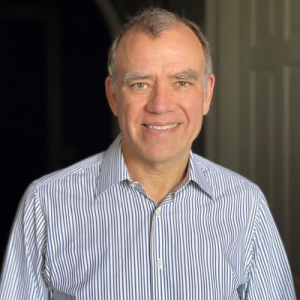
Headshot of Christopher Wilkins. He is smiling, wearing a gray and light blue shirt.CHRISTOPHER WILKINS was appointed Music Director of the Boston Landmarks Orchestra in the spring of 2011. Since then, he has expanded the orchestra’s mission of making great music accessible to the whole community. He has also helped develop the orchestra’s Breaking Down Barriers initiative, making accessibility a priority in all aspects of the orchestra’s activities.

Mr. Wilkins also serves as Music Director of the Akron Symphony. As a guest conductor, Mr. Wilkins has appeared with many of the leading orchestras of the United States, including those of Chicago, Cincinnati, Cleveland, Dallas, Detroit, Houston, Indianapolis, Los Angeles, Pittsburgh, and San Francisco. Previously, Mr. Wilkins served as Music Director of the Orlando Philharmonic, the San Antonio Symphony, and the Colorado Springs Symphony.

He has served as associate conductor of the Utah Symphony, assisting Joseph Silverstein; assistant conductor of the Cleveland Orchestra under Christoph von Dohnányi; conducting assistant with the Oregon Symphony under James DePreist; and was a conducting fellow at Tanglewood. He was winner of the Seaver/NEA Award in 1992.

Born in Boston, Mr. Wilkins earned his bachelor’s degree from Harvard College in 1978. He received his master of music degree at Yale University in 1981, and in 1979 attended the Hochschule der Künste in West Berlin as a recipient of the John Knowles Paine traveling fellowship. As an oboist, he performed with many ensembles in the Boston area, including the Berkshire Music Center Orchestra at Tanglewood, and the Boston Philharmonic under Benjamin Zander.

Flute

Lisa Hennessy, Principal

Joanna Lau

Rachel Braude


Piccolo

Rachel Braude


Oboe

Andrew Price, Principal

Benjamin Fox


Clarinet

Rane Moore, Principal

Margo McGowan


Bassoon

Katia Osorio, Acting Principal

Gregory Newton

Meryl Summers

Rachel Juszczak


Horn

Kevin Owen, Principal

Clark Matthews

Whitacre Hill

Nancy Hudgins


Trumpet

Dana Oakes, Principal

Jesse Levine

Mary-Lynne Bohn

Joseph Foley

Kyle Sparker

Ryan Noe

Adam Gautille

Peter Everson


Trombone

Liam Glendening, Principal

Hans Bohn


Bass Trombone

Donald Robinson


Tuba

Donald Rankin, Principal

Timpani

Robert Schulz, Acting Principal


Percussion

Craig McNutt, Acting Principal

First Violin

Gregory Vitale, Concertmaster

Christine Vitale

Yeolim Nam

Heidi Braun-Hill

Alice Hallstrom

Mitsuru Yonezaki

Hikaru Yonezaki

Zoya Tsvetskova


Second Violin

Rose Drucker, Acting Principal

Colin Davis

Stacey Alden

Lisa Brooke

Amy Sims

Shelia Vitale

Xiao Fu


Viola

Don Krishnaswami, Acting Principal

Noriko Futagami

Liana Zaretsky

Sharon Bielik

Kara Charles


Cello

Aron Zelkowicz, Principal

Melanie Dyball

Patrick Owen

Sam Ou

Jing Li


Bass

Robert Lynam, Principal

Barry Boettger

Kevin Green

Bebo Shiu


Personnel Manager

Christopher Ruigomez


Librarian

Cassian Ramos

Andrés Almirall


Arranger

David Kempers

Prelude Concert

Chelsea High School Orchestra
Ali You, conductor

Swamp Thang — Richard Meyer

First Violin
Emmanuel Rodriguez
Nathan Pleitez
Karla Anzora
Joshua Cordova

Second Violin
Evelyn Sandoval
Darlin Palacios

Viola
Rachel Godoy
Dariel Medina
Alexander Lopez
Hellen Martinez
Jemima Pacheco

Cello
Claudia Martinez
Gerard Pena
Carlos Perez

Bass
Antoni Velasquez
David Rodas

NEMPAC 2026 Summer Singers
Jayson Banton, Director
Anissa Perona, conductor
Harriet Hung, piano

Dona Nobis Pacem
Evening Prayer (English) from Hansel and Gretel — Engelbert Humperdinck
This Little Light of Mine — Arranged by Raffi
Simple Gifts — Arranged by Mark Hayes

Student Performers
Silvia Bucci
Sofia Chavarro
Augusta Fry
Antonio Lazarri
Madelyn Litfosky
Naia Manchanda
Tess Nuzum
Adriana Paquette
Miles Paquette
Will St. Andre

Guest Artists

Cantata Singers logoCantata Singers illuminates our shared humanity through choral music. At Cantata Singers, we raise our voices together in song, bringing artistry to an enduring tradition that has long
cultivated relationships, shaped culture, and fostered mutual understanding.

Through music making and community building, we create opportunities for people of all ages, cultures, and identities to engage with others in ways that uplift, inspire, and help them feel that their stories are being heard.

Choral music offers the unique opportunity for musicians and audiences to explore together what it means to be human. Our programming honors the diverse perspectives and experiences that comprise our world, acknowledging that when we better understand our shared humanity, we develop deeper connections and amplify what unites us.

@CantataSinger       CantataSingers.org

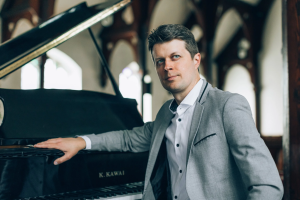
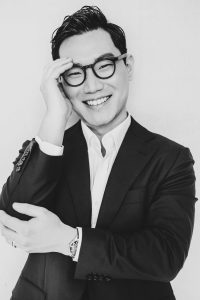
Headshot of Noah Horn sitting at the piano.As a conductor whose work has been praised as “superb” (The New York Times), Dr. Noah Horn serves as Music Director of Cantata Singers, a Boston-based choir and orchestra that is “one of the city’s
most treasured ensembles” (The Boston Globe). His performances with Cantata Singers have displayed “masterful virtuosity and expressivity” (The Boston Musical Intelligencer), and were “well
prepared and fervently delivered” (Boston Classical Review).

Noah is Artistic Director of Audivi, which he founded in 2013. Audivi has appeared as a featured ensemble at the American Choral Directors Association (ACDA) Central, North Central, and Michigan conventions, and the American Guild of Organists (AGO) New England convention. Audivi also serves as the professional symphony chorus for the Detroit Symphony Orchestra. As the DSO chorus master, Noah has prepared numerous choirs for music directors Leonard Slatkin and Jader Bignamini since 2015. Audivi’s performance of Beethoven’s Symphony No. 9 was “triumphant” (Detroit Free Press), featuring a “rich tapestry of voices resounding” (Bachtrack).

A passionate educator, Noah has taught at numerous colleges and universities, most recently on the faculty of Harvard University as conductor of the HarvardRadcliffe Collegium Musicum. He has been the director of orchestral activities at Wesleyan University; director of choral activities at Oberlin Conservatory of Music, Williams College, Amherst College, Western Michigan University, and Wayne State University; and conductor of the Yale Schola Cantorum. Noah holds a Doctor of Musical Arts degree in choral conducting from Yale University.

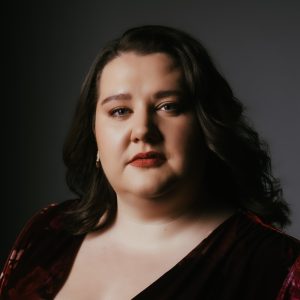
Headshot of Felicia MooreNoted by The Wall Street Journal for her “opulent, Wagner-scaled soprano” and acclaimed by The New York Times as the “lustrous, commanding soprano,” Felicia Moore is recognized by Opera News as “a genuine jugendliche dramatische soprano of exciting potential (and present accomplishment).”  She is a powerful and innovative artist having made music in partnership with Alan Gilbert, Anne Manson, Sir Donald Runnicles, Ken-David Masur, Yannick Nézet-Séguin, Susanna Mälkki, Rafael Payare, Speranza Scappucci, Alexander Shelley, Evan Rogister, Gary Thor Wedow, Ryan Wigglesworth, and Brian Zeger, among others.

Highlights of the 2026-27 operatic season include Lady Macbeth, covering Lise Davidsen, in the Metropolitan Opera’s Macbeth with Met Music Director Yannick Nézet-Séguin taking the podium for a penetrating new production by Louisa Proske. A dynamic concert diary includes the First Act of Die Walküre with Nathalie Stutzmann and the Atlanta Symphony Orchestra, the Verdi Requiem with The Florida Orchestra and Boston Landmarks Orchestra, a debut with the Minnesota Orchestra in performances of Rachmaninoff’s The Bells led by Thomas Søndergård, and a suite from Tristan und Isolde with Courtney Lewis leading the Jacksonville Symphony.

Last season Felicia Moore continued her affiliation with Deutsche Oper Berlin where the American soprano enjoys a particularly close artistic relationship: she bowed as Gerhilde in Die Walküre and as the Third Norn and Gutrune in Götterdämmerung in Stefan Herheim’s production of Der Ring des Nibelungen and joined Sir Donald Runnicles in concert performances of Schoenberg’s Gurre-Lieder.  Symphonic programming also included performances of Britten’s War Requiem with Stéphane Denève leading the Saint Louis Symphony and Strauss’ Vier Letzte Lieder with David Chan conducting the Apollo Orchestra.

Highlights of the recent past include performances of Lady Macbeth in a new production of Macbeth for Deutsche Oper Berlin conducted by Enrique Mazzola as well as Die Kaiserin in Tobias Kratzer’s new production of Die Frau ohne Schatten conducted by Sir Donald Runnicles and performances of the Verdi Requiem with JoAnn Falletta and the Dallas Symphony Orchestra and with Matthew Kraemer leading the Louisiana Philharmonic Orchestra.  Felicia Moore has performed Beethoven’s Ninth Symphony with many of the premier orchestras including with Xian Zhang and the New Jersey Symphony, Susanna Mälkki and The Cleveland Orchestra, Rafael Payare and the San Diego Symphony, Ken-David Masur and the Milwaukee Symphony, and with Tito Muñoz and the Phoenix Symphony.

Metropolitan Opera highlights of the recent past include Lady Macbeth of Mtsensk conducted by Keri-Lynn Wilson, The Magic Flute under Dame Jane Glover, Elektra led by Sir Donald Runnicles, Nabucco under the baton of Daniele Callegari, and the company premiere of Anthony Davis’ groundbreaking and influential opera, X: The Life and Times of Malcolm X in a new production by the theater luminary and Tony-nominated director of Slave Play, Robert O’Hara.  She made role debuts as Sieglinde in Die Walküre with New Orleans Opera, as Senta in Der fliegende Holländer at Opera Maine, and in the title role of Ariadne auf Naxos with the Lakes Area Music Festival.

Felicia Moore bowed as Susan B. Anthony in The Mother of Us All as a part of Project 19 – the New York Philharmonic’s multi-season initiative marking the centennial of the 19th Amendment – as Donna Elvira in Don Giovanni for Palm Beach Opera, as Mrs. Grose in Britten’s The Turn of the Screw at Opera Columbus, and at Juilliard in the title role of Janáček’s Katya Kabanova conducted by Anne Manson in a new production by Stephen Wadsworth.

Past symphonic engagements include Gurre-Lieder at Carnegie Hall with the American Symphony Orchestra, Mozart’s Requiem with Itzhak Perlman and the Houston Symphony, Mahler’s Second Symphony with Daniel Meyer and the Erie Philharmonic, and Wagner’s Wesendonck Lieder with David Chan leading the APEX Ensemble.  Felicia Moore has performed Verdi’s Requiem with Alexander Shelly and the National Arts Centre Orchestra, The Immolation Scene from Wagner’s Götterdämmerung with the Danish National Symphony Orchestra conducted by Ryan Wigglesworth, and an Opera Gala with the Bergen Philharmonic.

Felicia Moore is a proud alumna of The Juilliard School, Mannes School of Music, and Westminster Choir College.

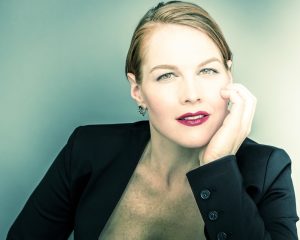
Headshot of Erica BrookhyserErica Brookhyser has emerged as a formidable

mezzo-soprano in the lyric and now the dramatic repertories. Her interpretations of Brangäne, Carmen, Didon, Preziosilla, Suzuki, as well as Waltraute, Wellgunde, and Zweite Norn have garnered excellent notices in Europe and the United States.

Notable recent performances include her debut with Los Angeles Philharmonic in La Traviata, a fully-staged El Niño at Spoleto Festival USA, Suzuki/Madama Butterfly with Opera Colorado, Brigitta/Die Tote Stadt with Odyssey Opera, and her return to Los Angeles Opera as Meg Page/Falstaff.

As principle mezzo-soprano in the Staatstheater Darmstadt ensembleMs. Brookhyser’s repertoire included the lyric roles of Cherubino/Le Nozze di Figaro, Muse-Nicklausse/ Les Contes d’Hoffmann, Fenena/Nabucco, and Orfeo/Orfeo ed Euridice, as well as the dramatic roles of Brangäne/ Tristan und Isolde, Carmen/Carmen, Didon/Les Troyens, Lola/Cavalleria Rusticana, Preziosilla/La Forza del Destino, Suzuki/Madama Butterfly, and Waltraute, Wellgunde, Zweite Norn/Der Ring des Nibelungen. She has appeared as Carmen with Theater Erfurt and Seefestspiele Berlin, and at Nationaltheater Mannheim as Wellgunde/Das Rheingold.

Ms. Brookhyser was the 2012 winner of ARTE-TV “Open Opera: Who will become Carmen?”a talent-search television show that aired in France and Germany, in which she won the title role of Carmen for a live televised broadcast from Berlin. She has received other honors including Semifinalist at the Operalia Competition, 1st Place Northwest Regional Metropolitan Opera National Council Auditions, a Sullivan Foundation Career Grant, and the John Moriarty Presidential Scholarship.

Her concert appearances include Moses und Aron with Boston Symphony Orchestra under the baton of James Levine, Blizzard Voices with BMOP under Gil Rose, Bach St. Matthew Passion and Mozart Mass in C-minor with the Cincinnati May Festival conducted by James Conlon, Das Lied von der Erde and Wesendonck Lieder with Orchester Staatstheater Darmstadt under the baton of Elias Grandy, and the Mahler Rückert Lieder with Newport Symphony Orchestra conducted by Adam Flatt.

Ms. Brookhyser made her professional debut as Myrtale/Thaïs with Boston Lyric Opera while still a Master’s student at New England Conservatory. She apprenticed with Utah OperaCentral City OperaTanglewood Music CenterSanta Fe Opera, and with the Plácido Domingo Young Artist Program at Los Angeles Opera where her mainstage roles included Waltraute/DieWalküre, Mercedes/​Carmen, Kate Pinkerton/Madama Butterfly,  Annina/La Traviata, and the Mother/Die Gezeichneten.

Headshot of Jonghyun ParkKorean tenor Jonghyun Park recently completed two seasons as a member of the Metropolitan Opera’s Lindemann Young Artist Development Program, where he performed the First Prisoner and covered Jaquino in Fidelio, and sang the Sergeant in Il barbiere di Siviglia. During his time with the program, he also covered Tybalt in Roméo et Juliette and made his Met debut as the First Guard in the holiday presentation of Die Zauberflöte.

In the 2025–26 season, he sang Ferrando in Così fan tutte at Opera San José, and made his Carnegie Hall debut in a solo recital with Gerald Martin Moore. He returned to the Metropolitan Opera to cover the Sailor’s Voice in Tristan und Isolde. He also sang the leading role of the Stranger in the world premiere of Sleepers Awake with Opera Philadelphia. This summer, he will perform the role of First Priest and First Armored Man in Die Zauberflöte at the Festival d’Aix-en-Provence, and he will return to Opera San Josè to sing the role of Don Ottavio in Don Giovanni.
On the concert stage, he recently performed with Sumi Jo in her 40th anniversary concert and he will appear as the tenor soloist in Mozart’s Requiem at Alice Tully Hall with the New York Choral Society. Later this season, he will sing as the tenor soloist in Bach’s Christmas Oratorio with the Philadelphia Orchestra under Yannick Nézet-Séguin.

In summer 2025, he made his role debut as Ferrando in Così fan tutte under the direction of Renée Fleming, and appeared as the tenor soloist in Handel’s Messiah under the baton of Dame Jane Glover at the Aspen Music Festival.

He was the recipient of the Fritz Wunderlich Award from the 2024 Opera Index Vocal Competition, second place winner of the New England District of the Met’s 2022 Laffont Competition, and third prize winner of the 2021 Premiere Opera Foundation International Vocal Competition.

He is an alumnus of the Merola Opera Program at San Francisco Opera and the Académie du Festival d’Aix-en-Provence and holds degrees in voice from Seoul National University and Yale University.

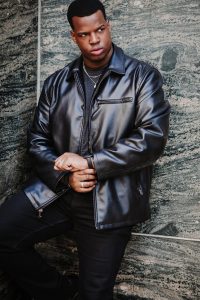
Headshot of Christopher Humbert Jr.Described as beholding ‘clarion vocal power’, ‘commanding presence’ and ‘Infectious character and charisma’ (operawire.com)…

Bass-baritone Christopher Humbert Jr, native of Akron, Ohio has proven a favorite with several audiences across the United States. Recently, Humbert made his debut at the Salzburg Festival as a member of the 2025 Young Singers Project. His performances included the world premiere of Sebastian Schwab and David Boesch’s Musketiere! in the role of Meister Wu, as well as Fouqier Tinville in the concert performance of Andrea Chenier, under the baton of Marco Armilliato. Humbert was chosen as a member of Lyric Opera of Chicago’s Ryan Opera Center (2023-2026). During the 2025-2026 season, he can be seen onstage in Cherubini’s haunting opera, Medea (Captain of the Guard), Salome (Second Soldier) and Madama Butterfly (Imperial Commissioner). Other highlights include Rigoletto (Count Ceprano), Fidelio (2nd Prisoner), and Blue (3rd Police Buddy) in the Lyric Opera of Chicago. Other appearances around the United States also include Carmen (Zuniga), I Capuleti e I Montecchi (Capellio), Die Zauberflöte (First Priest) and Dido and Aeneas (Aeneas) with Palm Beach Opera, Agrippina (Pallante), with Florida Grand Opera, Omar (Olufemi) with Boston Lyric Opera, Madama Butterfly (Bonze) with Lubbock Symphony Orchestra, Don Giovanni (Il Commendatore) with Opera Columbus, and Oklahoma! (Jud Fry) with The Seagle Festival.

In the spring of 2020, Humbert made his Carnegie Hall debut as a soloist with Manhattan Concert Productions in the performance of Ralph Vaughan WIlliams’ Dona Nobis Pacem. Additionally, he made his debut under the baton of David Robertson, in Haydn’s Creation with the Seattle Symphony, where his listeners “[…] relaxed and leaned forward, knowing we were in good hands” (Operawire.com) In addition to his stage accolades, he was recently named one of the recipients of the Shsoshana Foundation’s, Richard F. Gold Career Grant in 2023, an honor bestowed upon emerging artists with great promise of an operatic career.

That same year, he was named a district winner of the Metropolitan Opera Laffont Competition in St. Louis, Missouri. His other competition credits include the American Opera Society of Chicago Distinguished Male Voice Award (2024), First place award in Opera Guild of Dayton’s Tri-State Vocal Competition (2019)  Humbert has also been featured on St. Louis Missouri’s Channel Nine station for the inaugural “Songs for St. Louis” televised concert series, and has been featured multiple time in the Ryan Opera Center recital series on Chicago’s WFMT Classical radio station. In addition to opera, Mr. Humbert is a frequented oratorio and concert soloist with multiple interpretations of Bach (Johannes-Passion), Händel (Messiah), Mozart (Requiem, Thamos König in Ägypten), Schütz (Mathäus-Passion) Haydn (The Creation, Nelson Mass) and Verdi (Messa di Requiem). His narration credits most recently include an engagement with Vista Philharmonic Orchestra, Aaron Copland’s musical memorial, Lincoln Portrait under the sturdy baton of Bruce Hangen.

Humbert currently holds a Master’s Degree in Opera Performance from the Boston Conservatory at Berklee, and is a graduate of the Capital University Conservatory of Music. He would like to thank his closest advisors and mentors, along with his beautiful mother, Karen for continuously being a beacon of light and support throughout his career.

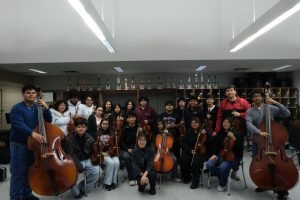
The Chelsea High School Orchestra, led by Ms. Ali You, is a student ensemble made up of musicians from different grade levels and musical backgrounds. Some students are beginning their musical journey, while others have continued developing their skills for several years. Through dedication, teamwork, and a shared passion for music, the students continue to grow as an ensemble.

Recently, the orchestra earned Second Place with a Superior Rating at the Music in the Parks competition, and we are very proud of their achievement and continued progress.

NEMPAC logoNorth End Music & Performing Arts Center (NEMPAC) is your 501(c)(3) community music school and performing arts center. We exist to enrich Charlestown, the North End, and surrounding Boston neighborhoods with accessible, high-quality arts programming and performances.

  • We believe the arts are an expression of our shared humanity.
  • We believe the arts are an antidote to stress, a source of comfort and hope, and an innate connection builder.
  • We believe the arts transform a neighborhood into a community.

Accessibility is the drumbeat of our organizational song. We define accessibility as creating opportunities for all to experience the transformative power of the arts. One of the ways we create opportunities is through youth scholarships.

@NEMPACboston    NEMPACboston.org

One City Choir & Cantata Singers

Soprano
Laurie Arnone (Roslindale)
Heidi Ashih (Cambridge)*
Elizabeth Bell
Shivani Bhandarkar
(Brookline)
Rebecca Burstein
(Cambridge)*
Mariaelena Caboni
(Somerville)
Jill Christians (Boston)
Andrea Costello
(Weymouth)*
Amy Crouch (Cambridge)*
Jo Davidson (Frisco, TX)
Julia Dunn (Cambridge)
Isabela Elizondo Collado
(Houston, TX)*
Beth Galer (N Easton)
Riley Granger (Boston)*
Sarah Holmes (Somerville)
Katie Holt (Swampscott)*
Kathy Howard (Acton)*
Liya Kang (Watertown)*
Valerie Kirr (Melrose)*
Monica Krishna (Brookline)*
Mia Krishnaswami (Norfolk)*
Lyndie Laramore*
Katie Lee (Los Angeles, CA)
Leslie Leedberg
(Southborough)
Ky Lowenhaupt
Erin Maloney
Edith Malungu (Medford)*
Isabel Merat
Eleonor Montanye
(Framingham)
Lois Moon (Somerville)
Beth Mosier
Susan Navien (Haverhill)*
Tammy Ngai (Boston)*
Betsy Noecker (Arlington)
Lindy Noecker (Arlington)
Kay Patterson (Somerville)*
Sage Phoenix (Boston)
Surya Reis (E Boston)*
Mary Reynolds (Boston)*
Ashley Scott*
Barbara Shimkas-Bennett
(Reading)
Amanda Simeone (E Boston)*
Epp Sonin (Lexington)*
Julie Starr (Brookline)
Julissa Tello (Miami, FL)*
Marie Toussaint (Brockton)*
Rachel Webb (Brighton)*
Victoria Wu (Boston)*
Wenqiong Xue (Medfield)
Chen Yan
Rachel Yurman (Cambridge)*

*Testament of Freedom Choir

Alto
Nasia Bachman
Mei Bailey (Cambridge)
Virginia Bailey
Amelia Baran (JP)*
Elizabeth Bernstein
(Cambridge)
Cristina Campassi
(Roslindale)
Kathy Carlson (Hadley)*
Sophie Crafts (Medford)*
Jean Croll (Norfolk)
Amy Dancz-Costa
(Watertown)
Audrey Dawson
Yingjing Deng (Arlington)
Rebecca Dobrzynski
Jane Dreskin (Cambridge)
Sheryl Elkin (Arlington)*
Margaret Evans (Brookline)*
Jen Farquhar (Hollis, NH)*
Lisa Ferrante-Walsh
(Newton)*
Sarah Fitzpatrick
(Cambridge)
Kate Fontanella (Roslindale)
Linda Frayling (Boston)
Kathleen Gallagher
Anu Gamage (Somerville)
Colleen Garrigan
(Somerville)*
Katya Gavrish (Natick)
Lena Gorelik (Newton)
Meredith Gulley
Sophia Halling
Kathryn Hastings (Malden)*
Mariah Henderson
Kelly Horan (Somerville)
Joo Hyun Im (Somerville)
Kirsti La Shell (Beverly)
Molly Lanzarotta (Boston)
Joanne LaPlant (Newton)
Ashley Lyon (Boston)
Mary MacDonald (JP)*
Natalie Mezzina (Boston)
Lisa Mitchell (Somerville)
Maggie Molloy
Josephine Noonan (Beverly)
Chiara Orlandi (Cambridge)
Ines Patop (Cambridge)
Kimberly Piper (N Reading)
Susan Reed
Sandy Sachs (JP)
Mariflor Salas (Newton)*
Andrea Schein (Cambridge)
Mary-Margaret Segraves
Gabriella Spatolisano
(Boston)*
Hannah Torp (Waltham)*
Rikki Tracy (Malden)
Kathryn Wang (Cambridge)
Mary Weinstein (Hopkinton)

Cynthia Welch Moriarty
(Amherst)
Natasha Westland (Carlisle)*
Caroline Whiddon (Melrose)
Elizabeth Williams*
Tenor
Rachel Burckardt
(Cambridge)
Fernando Colina (Boston)
Henry Dinger (Waltham)
Paul Garver (Acton)
Logan Grubb (Back Bay)
Ashley Henderson
Dan Horgan (Cambridge)
Charles Kraman (Boston)
Justin Mazzola Paluska
Tom Regan (Brighton)*
Jennifer Rochow
(Cambridge)
Timothy Rodriguez
(Brookline)
William Tuttle (W Roxbury)
James Wang (Sharon)
Pace Willisson (Cambridge)
Bass
Nima Badizadegan*
Alexander Bartholomew
(Somerville)*
Henry Clapp
Joshua Daniels (JP)*
Jack DeVine (Somerville)
Tyler Etzel (Cambridge)*
William Farquhar (Hollis, NH)*
Robert Goldsmith (Carlisle)
Philip Gotwals (Needham)
Mike Halling
David Hammond (Malden)
Josh Howe (Cambridge)*
Nat Kuhn (Belmont)
James Liu (Cambridge)*
Dan Malis (Westport)
Tim McKenna (JP)
Alan Mclellan (Boston)
Giorgio Melloni (Somerville)
Stephen Osadetz
David Pogue (Dorchester)*
Nathan Rankin (Boston)*
Brian Rappaport
(Somerville)
Martin Ryan (Boston)*
Rory Schadler (Back Bay)
Ronald Segal (Boston)
Elyahu Segev (Boston)
Sean Shen (Metheun)
Ken Silber (Cambridge)*
Ross Simmons
Timothy Smith (Hyde Park)
Ryan Spilker (Lexington)*
Frank Tafuri (Winthrop)
Alex Tinguely (Cambridge)
Robert Tuttle (Fitchburg)*

Podium Note

by Christopher Wilkins

Thompson Two Passages from The Testament of Freedom

Throughout the musical world, Randall Thompson is known for his choral masterpiece, Alleluia, composed for the very first Berkshire Music Festival at Tanglewood in 1940. Intended for the whole community to sing together during opening ceremonies, it is still performed every year at Tanglewood’s first session.

Thompson was born in New York City in 1899 but spent much of his career in Boston, where he died in 1984. Throughout his life, he balanced composition with teaching. Harvard University, Wellesley College, and the Curtis Institute of Music all benefited from his extraordinary gifts as a teacher and mentor. Prior to coming to Harvard, Thompson headed the music department of the University of Virginia, serving from 1941–1945.

Thompson composed The Testament of Freedom in 1943 to mark the bicentennial of Thomas Jefferson’s birth. He dedicated the work to the University of Virginia Glee Club, “in memory of the Father of the University.” The premiere was broadcast nationwide and later rebroadcast by the Office of War Information to American servicemen and women overseas.

In 1945, Thompson paired the outer movements of the four-movement workto create

Two Passages from The Testament of Freedom. Omitting the two inward-looking middle movements, he produced a more compact version that retains the original’s broad arc—from Jefferson’s affirmation of liberty to his vision of national purpose.

In the opening bars, the orchestra announces the name “Thomas Jefferson” in majestic rhythmic chords. The chorus then introduces the work’s principal theme in unison over a simple harmonic accompaniment: “The God who gave us life gave us liberty at the same time.” That theme returns twice in the closing movement—first in a serene setting for strings alone, then for the full forces at the conclusion. Throughout, Thompson’s musical language remains direct and unadorned, projecting Jefferson’s words with utmost clarity.

To celebrate America 250, the Landmarks Orchestra has programmed American works of many kinds. The Testament of Freedom is a distinguished example of patriotic concert music by one of Boston’s most important—and, in our view, underappreciated—composers. The historian Jacques Barzun observed that Thompson’s music “does not simply echo popular sentiment, but distills meaning from popular experience.” He also recalled telling Thompson that “his way of speaking, acting, and dressing; his letters and his music were all marked by one quality—elegance.”

We are thrilled to perform Verdi’s Requiem with an extraordinary roster of guest artists. For the first time since 2022, the One City Choir—with members welcomed from every neighborhood of Boston—appears center stage. Joining them are the acclaimed Cantata Singers, with Music Director Noah Horn, and an exceptional solo quartet.

Verdi Messa da Requiem

Few can resist the Verdi Requiem.

The text unfolds as a series of dramatic scenes with the listener at the center of the action. We hear the last trumpet sound, watch flames consume the damned, tremble before the Supreme Judge, sob with mourners, and grieve with the penitent. In the work’s most celebrated passage, trumpets surround the audience as if on Judgment Day. Graves open and souls plunge into purgatory as the wrath of God comes pouring down. It is a representation to rival Michelangelo’s The Last Judgment, to which it is often compared.

Yet for all its dramatic power, Verdi wished to distance his Requiem Mass from the operatic tradition. “One must not sing this Mass in the way one sings opera,” he wrote. “Therefore phrasing and dynamics that may be fine in the theatre won’t satisfy me at all, not at all.”  He wished for purity of delivery appropriate to the sacred subject, and always beauty in the vocal line, the hallmark of Verdi’s music. Our superb solo quartet—Felicia Moore, Erica Brookhyser, Jonghyun Park, and Christopher Humbert Jr.—embody the very qualities Verdi took pains to describe.

Verdi’s Requiem was the first great setting of the Mass for the Dead to establish itself primarily as a concert work. Earlier Requiems—including monumental works of Mozart, Cherubini, and Berlioz—were intended for liturgical use and would have been performed with the officiating priest singing prayers between the movements. Although Verdi’s Requiem was first performed as part of a memorial service in Milan, he always led it thereafter only in concert halls. For this reason, it is also considered the first Requiem conceived as one continuous work, with each movement proceeding directly to the next.

I. Requiem e Kyrie
The music begins with low cellos intoning a simple descending line, as if lowering a casket into the grave. The chorus sings sotto voce—in a hushed voice— “Requiem aeternam” (“Eternal rest”), like a congregation praying together. A small group of sopranos sings “Dona eis, Domine” (“Grant them, O Lord”), breaking away from the larger group to make a fervent plea. At “et lux perpetua luceat eis” (“and may perpetual light shine upon them”), the music moves from the darkness of minor to the radiance of major as the chorus sings alone a hymn of praise in archaic style.

The opening music returns before opening out into the Kyrie where the soloists are heard for the first time. Singing in full Verdian splendor, their prayer is personal rather than communal. Verdi begins—as tradition would have it—with the solo tenor, representing Everyman.

II. Dies Irae
The Dies Irae is by far the longest portion of the Requiem, comprising more than a third of the music and nearly half of the text. It unfolds in eleven distinct sections, each flowing directly into the next. (1) The movement begins with orchestral hammer blows, as if delivered by the Supreme Judge. When the music returns moments later, thunderous strokes of the bass drum are inserted between the chords, amplifying our sense of terror with each Shakespearean “crack of doom.” Downward-plunging figures in the strings and low brass evoke the fate of the damned. Huge thanks to the Harvard University Band for loaning us “Big Bertha”—one of the largest playable natural skin bass drums in the world.

(2) No sooner has the chorus foretold the “terror [that] will be when the Judge shall come” than eight trumpets announce that the terrible day is upon us. Four trumpets onstage are answered by four out of sight (or out on the Esplanade lawn). Their call begins as a distant warning, but the ever-increasing tempo and volume bring us inexorably face to face with our impending doom. By the time the chorus enters, all hell has broken loose.

(3) Following the words “the trumpet… will gather everyone before the throne,” a tension-filled silence signals that the world itself has come to a stop. “Death and nature will be stunned,” the bass soloist stammers, barely able to speak. The Requiem’s first extended solo belongs to the alto, who solemnly proclaims that the book of judgment shall be opened. She begins by intoning a single pitch before expanding into an impassioned plea. Midway through, the brass return with what Julian Budden memorably described as “the searchlight gaze of the Supreme Judge from whom nothing is hid.” The chorus trembles beneath the soloist’s words until (4) the opening Dies irae music erupts once again.

(5) Verdi now presents the first ensemble of the Requiem: a trio for soprano, alto, and tenor. The text becomes personal, shifting for the first time into the first person. The mood grows increasingly apprehensive until, (6) all bass voices and instruments invoke the King of Dreadful Majesty in music recalling the great maledictions of Verdi’s operas. Against this overwhelming display of divine power, the soloists plead for mercy with mounting urgency, culminating in the soprano’s first high C—the first of only two in the Requiem.

(7) In the soprano-alto duet, Recordare, attention turns for the first time to Jesus. “Recall,” they plead, “that I was the reason for your journey.” Quiet woodwinds reiterate the fearsome rhythm associated with “Salva me” (“Save me”) from the previous section. The vocal lines are at once consoling and unsettled, ending in a wonderfully meandering cadenza for the two soloists. (8) The Ingemisco for tenor solo is the most personal passage of the Dies Irae. The supplicant’s voice grows from guilt and unworthiness—reminding Christ that He forgave even Mary Magdalen—to the confident hope of joining the blessed at His right hand. (9) In the Confutatis, the bass invokes the fires of hell once again before pleading to be called among the blessed. (10) The opening music of the Dies irae returns for the third time (we will hear it once more at the very close of the Requiem).

(11) A descending line in the violins leads to the Lacrymosa, music originally composed for Don Carlos. It evokes the sorrow of all humanity, yet it begins with the alto soloist alone, who may represent the Virgin Mary weeping at the foot of the Cross. An unexpected harmony on the final “Amen” leaves us with more uncertainty than consolation.

III. Offertorio
The Offertory begins with a prayer for deliverance from the terrors of hell. The solo soprano, accompanied by luminous high violins, expresses the hope that the Archangel Michael will lead the faithful into holy light. Verdi sets the text relating to Abraham and his descendants as a fugue, in accordance with tradition, its multiplying voices reflecting God’s promise that Abraham’s seed shall increase without number. The Hostias, begun quietly by the tenor, is imbued with gentle devotional warmth. The fugue returns now with increased power before a final recollection of the opening prayer.

IV. Sanctus
A mere two and a half minutes in length, the Sanctus is ablaze with light. Brass fanfares herald powerful declamations of “Holy, holy, holy.” Verdi divides the chorus into eight independent parts, creating a brilliant web of counterpoint that bursts forth in praise.

V. Agnus Dei
Solo soprano and alto spin out a gentle, chant-like melody, answered by the chorus in unison. The soloists repeat the melody in the minor mode, and the chorus responds again. A third iteration of the chant adds a single word—“sempiternam” (“everlasting”)— to ask that the promised rest be eternal. A final rising gesture in the violins points heavenward.

VI. Lux aeterna
A constant interplay of light and darkness animates the Lux aeterna. Scored for mezzo-soprano, tenor, and bass, the music alternates between the radiance of perpetual light and the shadow of death. The solo soprano is not part of the ensemble, as she awaits her climactic role in the final movement.

VII. Libera me
We end where Verdi originally began, with the Libera me, first conceived as the concluding movement of an earlier Requiem in memory of Rossini. In the summer of 2016, the Landmarks Orchestra gave the New England premiere of the original 1869 Libera me, featuring the One City Choir, Back Bay Chorale, and English soprano Jane Eaglen.

The solo soprano opens the movement with panic in her voice, crying out to be delivered from damnation on that day when the earth shall move. The chorus mutters a fearful response. The hammer blows of the Dies irae return, mounting one final assault. The chorus—without accompaniment—sings the music first introduced by the strings at the opening of the Requiem. The soprano repeats her impassioned plea for deliverance, leading to a great choral fugue that reveals the desperation of the people with such vehemence that they seem, in Francis Toye’s words, “intent on achieving salvation by violence.” All forces unite on the words “Domine, libera me” (“Lord, deliver me”) in music recalling passages in Verdi associated with the Risorgimento and the struggle for political independence in Italy. In one final dramatic gesture, the soprano rises again to a ringing high C before collapsing in exhaustion before the unknown. The Requiem concludes with the chorus uttering a monotone, colorless “Libera me.” While the orchestra offers the promise of a major chord, the ultimate outcome remains in doubt. Verdi—ever the skeptic—returns the question of salvation to the listener.

ASL Interpretation

Logo of Think Outside the Vox

Boston Landmarks Orchestra is proud to partner with Think Outside the Vox (VOX) to provide culturally competent ASL interpretation for select performances. The American Sign Language interpretations are crafted with the leadership and artistry of a Deaf Director of Artistic Sign Language (DASL), and communicate the feeling and story of the music. VOX is committed to creating and elevating accessible arts experiences for and by Deaf, Blind/Low-Vision, and disability communities.

Tonight’s ASL interpreters:

Rachel Berman-Kobylarz, Director of Artistic Sign Language
Desiree Weems, ASL Interpreter
Aimee Robinson, ASL Interpreter

Ambassador Program

Started in 2022, the Ambassador Program aims to seasonally employ enthusiastic, music-loving folks from a variety of backgrounds, representing the diversity of Boston’s neighborhoods. With 54% of our Ambassadors speaking more than one language—including Spanish, Portuguese, and French—they help spread the word of Boston Landmarks Orchestra to a vast number of Boston communities, including Roxbury, Jamaica Plain, East Boston and more. From promoting our concerts in their own neighborhoods, to helping patrons both new and familiar navigate the Esplanade, our Ambassadors are here to engage as many people as possible, promoting Boston Landmarks Orchestra’s mission of building community through great music.

THANK YOU
to our many donors and supporters. 

Special thanks to Directors, Advisors, Musicians and Staff who make our work possible.

Click here for a list of Board Members

Share With Us!

Tag us @LandmarksOrch

Use the hashtags #LandmarksOrchestra #Landmarks2026

Translate »