Music 101:
What is an orchestra?
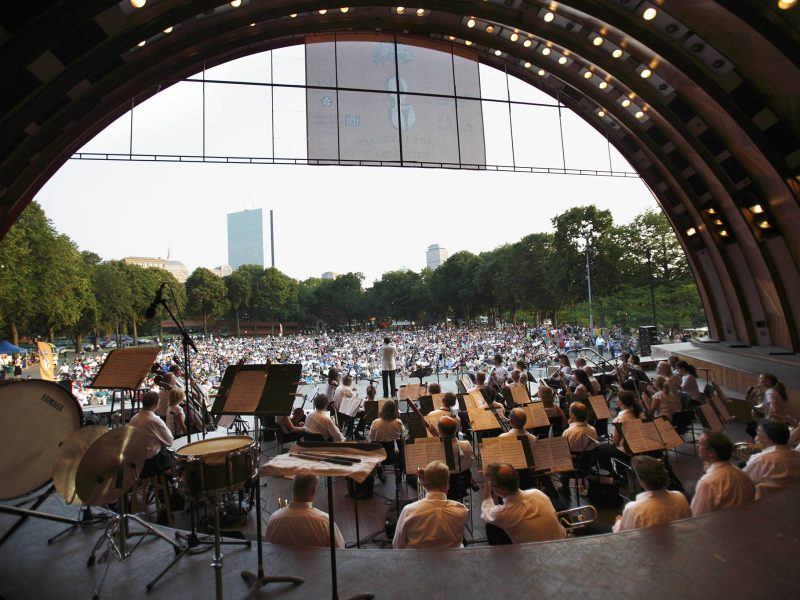
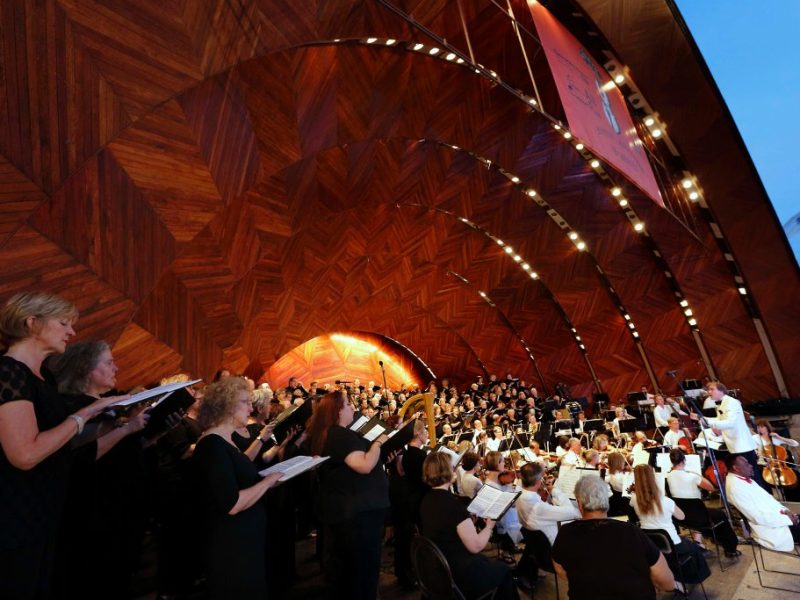
An orchestra is a carefully balanced musical ensemble in which dozens of musicians, each with distinct instruments, sounds, and roles, work together to create music no single musician could produce alone. This tradition has gone on for centuries, and Boston Landmarks Orchestra is proud to increase access to the artform through free orchestral performances in familiar public venues like the DCR Hatch Memorial Shell and across Boston’s neighborhoods.
Central to all orchestras is collaboration. Musicians must listen closely to one another, respond to the conductor, and constantly adjust their timing, balance, phrasing, and dynamics. When it works, dozens of individual decisions become a single magical musical expression which can communicate emotions and feelings and impact people in extraordinary ways.
Keep scrolling to learn more about the answers to questions like:
- Why does an orchestra need a conductor?
- Why are the musicians seated where they are?
- What to watch for when you’re at a concert?
What is a conductor? And a music director?
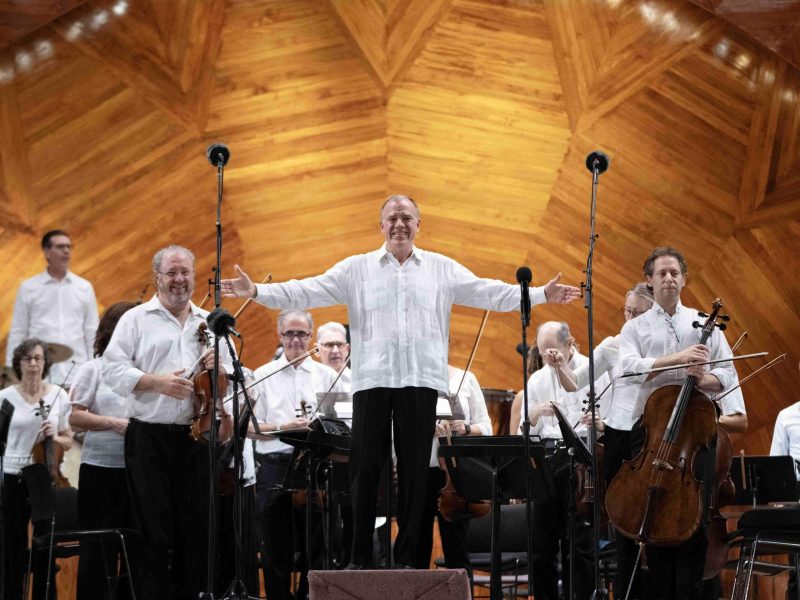
The music director is in charge of all musical aspects of the orchestra. They select the music, hire the musicians, and shape the artistic vision of an orchestra. A conductor is the leader of the orchestra, the person you see waving their arms in front of the musicians. Conductors use their bodies to guide the musicians on details within the music, like the speed (tempo) and loudness/softness (dynamics). The conductor also leads rehearsals.
Video: What Does a Conductor Do?
Christopher Wilkins, Music Director of the Boston Landmarks Orchestra and Conductor of this season’s concerts
What are the sections of an orchestra?
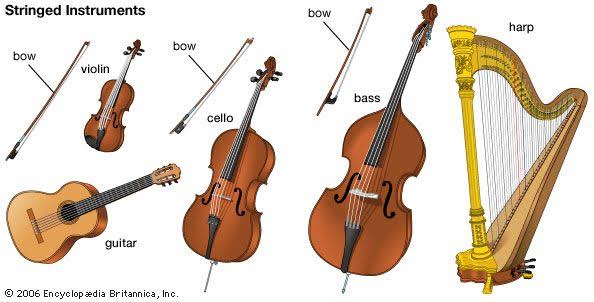
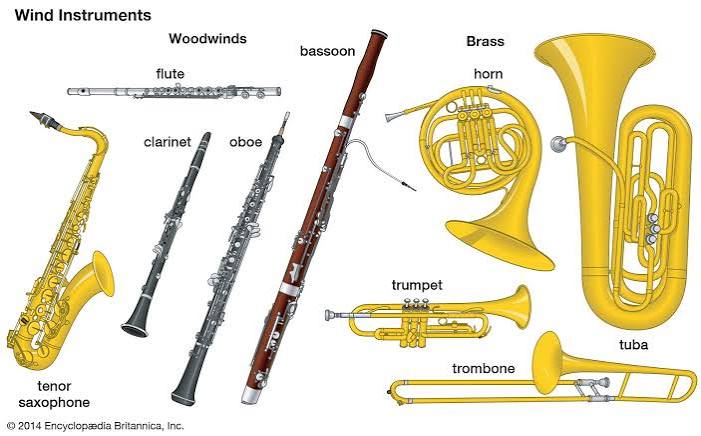
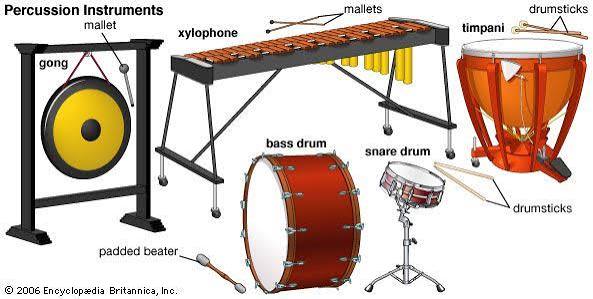
The modern orchestra brings together four families of instruments: strings, woodwinds, brass, and percussion. which distinguishes the orchestra from many concert bands and wind ensembles. Woodwinds, brass, and percussion add their own voices, while instruments such as the harp, piano, or celesta may be added when a particular work calls for them. Composers use these contrasting sounds almost as painters use a palette, combining and layering them to create an extraordinary range of musical effects.
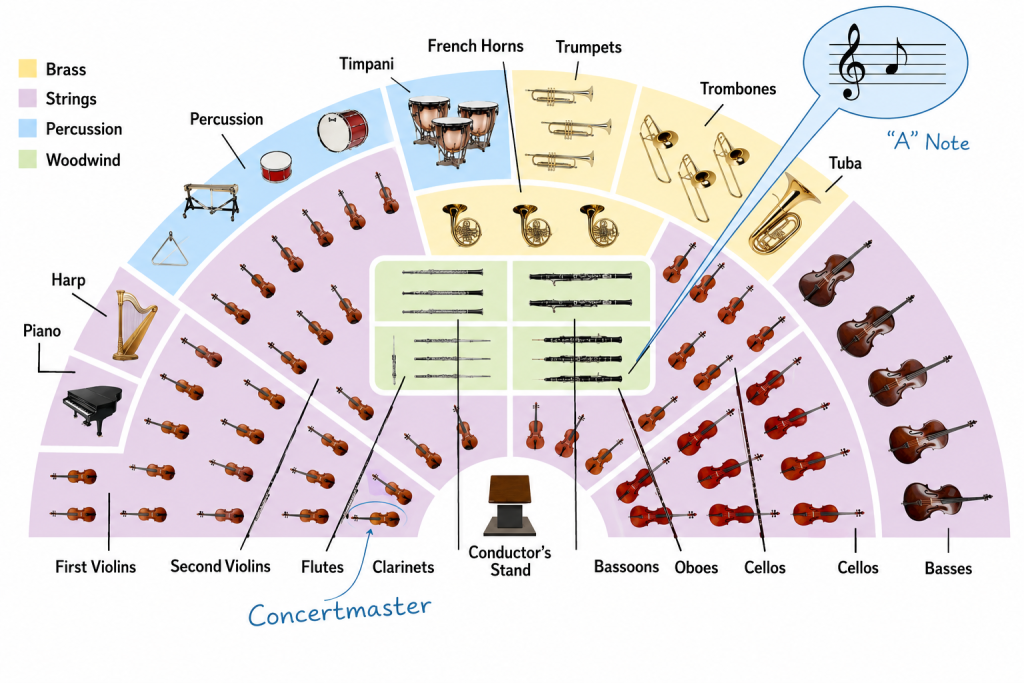
There is a hierarchy within each section, and the first chair player leads the section. The first chair violin player, Greg Vitale, is the concertmaster. The concertmaster is the highest ranking player in the orchestra, and is responsible for leading the tuning at the beginning of rehearsals and concerts, decision making, and leading by example. The concertmaster is considered the “first among equals” and acts as an intermediary between the players and the conductor.
What is the typical seating arrangement?
Why is the orchestra arranged this way? Click here for more information!
Who are the Boston Landmarks Orchestra musicians?
We are so lucky to have incredibly high level, professional musicians from Greater Boston within the Boston Landmarks Orchestra. Some play in local orchestras like the Boston Ballet, Boston Pops Esplanade, Boston Lyric Opera, and other professional orchestras in the region. Many also teach at leading conservatories and schools.
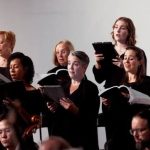
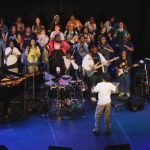
We also partner with other musical ensembles for our concerts each summer. This year, we are partnering with Berklee’s Reverence Gospel Ensemble, Grooversity, and the Cantata Singers!