Landmarks Orchestra's logo that reads: "Boston Landmarks Orchestra" surrounded by a deep purple rectangle. Clockwise, there are other squares with different colors and abstract figures in white, including an orange square with a violin player, a brown square with a conductor with a baton, a red square with a narrator reading from a book, a yellow square with a flute player, a gray square with two figures applauding, and a green square with a dancer.

The Best of Boston

Wednesday, July 22 2026
7:00PM – DCR Hatch Memorial Shell

Table of Contents

The Best of Boston

Boston Landmarks Orchestra
Christopher Wilkins, conductor
In partnership with Everyone250 & Embrace Boston
Marcus Santos, leader | Grooversity
Reverence Gospel Ensemble of Berklee

Festival Overture on the American National Air Dudley S. Buck
(1839–1909)
Of Our New Day Begun Omar Thomas
(b. 1984)

Members of the Reverence Gospel Ensemble of Berklee
Keeme Tajudeen, conductor

Symphonic Dances from West Side Story Leonard Bernstein
(1918-1990)
Prologue—Tensions grow between the two gangs
“Somewhere”—In a dream, friendship unites the two gangs
Scherzo—They imagine themselves in a playful world of space, air, and sun
Mambo—Back in the real world, they engage in a competitive dance at the gym
Cha-cha—Maria and Tony first meet and dance together
Meeting Scene—They speak their first words to each other
“Cool” Fugue—Riff, leader of the Jets, encourages hostility in his gang
Rumble—In a gang battle, Riff, Bernardo, and Tony are killed
Finale—The two gangs reconcile, fulfilling the vision of “Somewhere”

intermission

Atraente—Ó Abre Alas Chiquinha Gonzaga
(1847–1935)
arr. and orch. By David Kempers

Marcus Santos and Grooversity

Symphony No. 4, Autochthonous William Grant Still
(1895-1978)
Moderately Fast
Slowly
Moderately Fast
Slowly and Reverently
Serenata Leroy Anderson
(1908-1975)
The Syncopated Clock Anderson
Jazz Pizzicato—Jazz Legato Anderson
The Waltzing Cat* Anderson
The Rakes of Mallow Anderson

*Music Circle’s Choice Winner

Run Time

The total run time of this concert is approximately two hours, with one intermission.

Boston Landmarks Orchestra

Boston Landmarks Orchestra LogoBoston Landmarks Orchestra builds community through great music. Landmarks produces free concerts and musical events across the greater Boston area. Increasing access to music for everyone is at the core of all its programming. Between 2018 and 2023, 70% of the repertoire Landmarks performed was written by composers of color or women. The orchestra intentionally promotes artists and targets audiences that have been historically excluded from orchestral music. Landmarks was founded in 2001 and began its signature summer concert series at the DCR Hatch Memorial in 2007. The orchestra also performs community concerts at local venues in neighborhoods such as Roxbury, Dorchester, and Jamaica Plain.

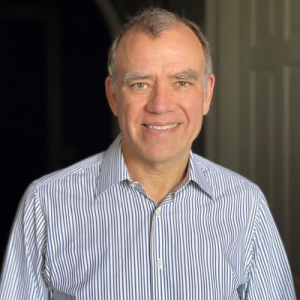
Headshot of Christopher Wilkins. He is smiling, wearing a gray and light blue shirt.CHRISTOPHER WILKINS was appointed Music Director of the Boston Landmarks Orchestra in the spring of 2011. Since then, he has expanded the orchestra’s mission of making great music accessible to the whole community. He has also helped develop the orchestra’s Breaking Down Barriers initiative, making accessibility a priority in all aspects of the orchestra’s activities.

Mr. Wilkins also serves as Music Director of the Akron Symphony. As a guest conductor, Mr. Wilkins has appeared with many of the leading orchestras of the United States, including those of Chicago, Cincinnati, Cleveland, Dallas, Detroit, Houston, Indianapolis, Los Angeles, Pittsburgh, and San Francisco. Previously, Mr. Wilkins served as Music Director of the Orlando Philharmonic, the San Antonio Symphony, and the Colorado Springs Symphony.

He has served as associate conductor of the Utah Symphony, assisting Joseph Silverstein; assistant conductor of the Cleveland Orchestra under Christoph von Dohnányi; conducting assistant with the Oregon Symphony under James DePreist; and was a conducting fellow at Tanglewood. He was winner of the Seaver/NEA Award in 1992.

Born in Boston, Mr. Wilkins earned his bachelor’s degree from Harvard College in 1978. He received his master of music degree at Yale University in 1981, and in 1979 attended the Hochschule der Künste in West Berlin as a recipient of the John Knowles Paine traveling fellowship. As an oboist, he performed with many ensembles in the Boston area, including the Berkshire Music Center Orchestra at Tanglewood, and the Boston Philharmonic under Benjamin Zander.
Flute

Lisa Hennessy, Principal

Hayley Miller


Piccolo

Rachel Braude


Oboe

Andrew Price, Principal

Laura Shamu


English Horn

Benjamin Fox


Clarinet

Sangwon Lee, Acting Principal

Margo McGowan


Eb Clarinet

Yhasmin Valenzuela


Bass Clarinet

Hunter Bennett


Alto Saxophone

Seychelle Dunn-Corbin


Bassoon

Jacob Thonis, Acting Principal

Gregory Newton


Contrabassoon

Margaret Phillips


Horn

Lauren Winter, Acting Principal

Clark Matthews

Robert Marlatt

Sarah Sutherland


Trumpet

Joseph Foley, Acting Principal

Jesse Levine

Mary-Lynne Bohn


Trombone

Liam Glendening, Principal

Hans Bohn


Bass Trombone

Cameron Owen


Tuba

Takatsugu Hagiwara


Timpani

Craig McNutt Principal


Percussion

Aaron Trant

Hans Morrison

Maria Finkelmeier

Jeffrey Means

Harp

Hyunjung Choi, Acting Principal


Keyboard

Bonnie Anderson


First Violin

Gregory Vitale, Concertmaster

Christine Vitale

Alice Hallstorm

Xiao Fu

Yeolim Nam

Hikaru Yonezaki

Mina Lavcheva

Paola Caballero


Second Violin

Colin Davis, Acting Principal

Stacey Alden

Lisa Brooke

EmmaLee Holmes-Hicks

Jeffrey Pearson

Christopher Nelson


Viola

Jean Haig, Acting Principal

Noriko Futagami

Don Krishnaswami

Liana Zaretsky

Jason Amos


Cello 

Aron Zelkowicz, Principal

Patrick Owen

Ronald Lowry

Sam Ou

Miriam Eckelhoefer


Bass

Robert Lynam, Principal

Barry Boettger

Kevin Green

Bebo Shiu


Personnel Manager

Christopher Ruigomez


Librarian

Cassian Ramos

Andrés Almirall


Arranger

David Kempers

Prelude Concert

FRANZ JOSEPH HAYDN
String Quartet in C major, Opus 20, No. 2: I. Moderato 

Siri Liu, Violin 1
Evelyn Kong, Violin 2
Emily Rome*,  Viola
Thea Xu, Cello

HAYDN
Piano Trio No. 39: III. Rondo all’Ongarese

Kevin Fu, Piano
Sanson Lui, Violin
Benjamin Chen, Cello

*faculty

Guest Artists

Marcus Santos headshotA contemporary percussionist and educator, Marcus Santos is a native of Bahia, Brazil. He commits his life to the study, teaching and performance of his hometown’s Afro-Brazilian music and heritage.

Marcus performed with several world renown artists such as the Gypsy Kings (Spain), Daniela Mercury (Brazil), and the Brand New Heavies (England). He has also performed for the president of Brazil, TEDx and with the “One World Band” produced by MTV. Marcus also played at the Sony Pictures Oscar nominated movie Rachel’s getting Married with Anne Hathaway. He has been honored with the 2013 KOSA Recognition award, Outstanding Arts Performer Award by the Brazilian Immigrant Center (2008) as well as Outstanding Percussionist Award by Berklee College of Music in 2004.

Marcus currently teaches in the Boston area at New England Conservatory, Middlesex Community College and Somerville High School. He is the author of the DVD Modern Approach to Pandeiro and performed in the music education DVD Musically Speaking II by BOSE. Marcus has lead workshops on Afro-Brazilian percussion and music for Social Change in festivals, universities and conventions around the world such as Fiesta Del Tambor (Cuba), Carnegie Hall (NYC), PASIC (USA) and Harvard University. He is currently the artist director of the Grooversity global drumming network project that includes 24 drumming groups from the US, Canada, Germany, Mexico, and France.

Grooversity logoIn 2004, hand drummer Marcus Santos from Salvador city in Bahia, Brazil, began a new concept in drumming and community outreach!

Grooversity is the innovative and creative drumming system that Marcus has developed for wellness, education and entertainment purposes. It promotes community outreach and diversity awareness while targeting health wellness. This multi-city percussion project is creating a network of people world wide.

Grooversity’s network includes people of different ethnicities, ages, and races. It portrays a positive message by engaging communities to support civil rights, encourage self-esteem, and appreciate physical and mental health, diversity, and, most importantly, enjoyment.

@Grooversity_Boston Grooversity.com

Rivers School Conservatory logoThe Rivers School Conservatory offers premier classical and jazz music education that develops the highest level of artistic and technical achievement in students of all ages.

We are a community that focuses on cultivating exceptional musicianship through performance. The hundreds of workshops, master classes, recitals, and concerts available each year present opportunities for each student to develop, strengthen, and refine his or her talent through public presentation.

We foster creativity and imagination in our students and cultivate the inspiration, self-confidence, discipline, and leadership skills that are developed through the exploration of music. We are proud of our reputation for developing a life-long passion for music in our students.

@RiversSchoolConservatory RiversSchoolConservatory.org

Berklee College of Music logoThe Reverence Gospel Ensemble is Berklee College of Music’s premier gospel choir, bringing together outstanding student vocalists and instrumentalists from a wide range of musical backgrounds. Rooted in the rich traditions of Black gospel music while embracing contemporary influences, the ensemble is known for its electrifying performances, expressive artistry, and spirit of joyful collaboration.

@ReverenceGospelChoirBerklee

Everyone250 logoEveryone250 is a living platform for reimagining Boston’s history. Rooted in storytelling, cultural activation, and civic engagement, it honors voices too often left out while inviting new ones in. As Boston approaches the 250th anniversary of the nation’s founding, Everyone250 offers a space to reflect, rewrite, and help build a more honest and inclusive future—one story at a time.

@Everyone_250

Embrace Boston logoFounded in 2017, Embrace Boston is a nonprofit with a mission to dismantle structural racism through their work at the intersection of arts and culture, community, and research and policy. Collectively, the work is intended to create a radically inclusive and equitable Boston where everyone belongs and the BIPOC community prospers, grounded in joy, love, and wellbeing. The organization is a deeply collaborative, BIPOC-led organization that is working toward an ecosystem which fosters equity, opportunity, and wellbeing for a transformed Boston by 2030, the city’s 400th birthday.

@EmbraceBos EmbraceBoston.org

Podium Note

by Christopher Wilkins

There are as many sides to American music as there are to the American people—our great, varied, many-sided democracy… We’ve taken it all in… and learned it from one another, borrowed it, stolen it, cooked it all up in a melting pot.

Leonard Bernstein, What is American Music?
CBS Television, February 1958

This year, the Boston Landmarks Orchestra celebrates its twenty-fifth anniversary by reaffirming our mission: performing great orchestral music for all Bostonians, free of charge. We celebrate the symphonic canon alongside music that reflects the “many-sidedness” of American culture, to use Bernstein’s term. And we make it a priority to collaborate with artists who are making vital contributions to Boston’s musical life.

Boston’s music schools have played a remarkable role in shaping American music. The Boston Conservatory and the New England Conservatory in particular offered opportunities more than a century ago that were uncommon elsewhere. Their comparatively open culture helped nurture composers and performers whose work broadened the American classical tradition.

Born in Hartford and trained largely in Europe, Dudley Buck joined the faculty of the New England Conservatory while serving as organist and choirmaster at Boston’s St. Paul’s Episcopal Church (now St. Paul’s Cathedral). His first major success as a composer came in 1872 with the Festival Hymn: Peace and Music, commissioned by the legendary bandmaster Patrick Gilmore for the World’s Peace Jubilee in Boston. Four years later, Gilmore commissioned another patriotic work for the nation’s centennial: Buck’s Festival Overture on the American National Air. Expanding an earlier organ composition into an orchestral showpiece, Buck wove The Star-Spangled Banner into the score decades before the song became the national anthem in 1931.

While completing his Master of Music Degree at the New England Conservatory, Omar Thomas was appointed Assistant Professor at Berklee College of Music at the remarkably young age of 23. In 2012, he was named the Boston Music Award’s “Jazz Artist of the Year.” A Yamaha Master Educator, he is currently Associate Professor of Composition and Jazz Studies at The University of Texas at Austin. The composer writes:

Of Our New Day Begun was written to honor nine beautiful souls who lost their lives to a callous act of hatred and domestic terrorism on the evening of June 17, 2015, while worshipping in their beloved sanctuary, the historic Emanuel African Methodist Episcopal Church in Charleston, South Carolina. My greatest challenge in creating this work was walking the line between reverence for the victims and their families, and honoring my strong, bitter feelings towards both the perpetrator and the segments of our society that continue to create people like him. I realized that the most powerful musical expression I could offer incorporated elements from both sides of that line—embracing my pain and anger while being moved by the displays of grace and forgiveness demonstrated by the victims’ families…

The piece is anchored by James Weldon and J. Rosamond Johnson’s time-honored song, “Lift Every Voice and Sing” (known endearingly as the “Negro National Anthem”), and peppered with blues harmonies and melodies. Singing, stomping, and clapping are also prominent features of this work, as they have always been a mainstay of Black music traditions, and the inclusion of the tambourine in these sections is a direct nod to Black worship services.

In 2019, Omar Thomas received the National Bandmasters Association/Revelli Award for his composition Come Sunday—performed by this orchestra in 2021—becoming the first Black composer so honored in the contest’s 42-year history. His inscription in the score could just as well apply to tonight’s work: “To all the Black musicians… who were given opportunity after opportunity to celebrate everyone else’s music but our own—I see you and I am you. This one’s for you!”

We are thrilled to present the Reverence Gospel Ensemble of Berklee, in our performance of Of Our New Day Begun. They are led by musician, vocal arranger, writer, and storyteller Keeme Tajudeen (Berklee College of Music ’26).

West Side Story is the best score ever written for musical theatre,” Stephen Schwartz, composer of Wicked, declared in 2008, “and still sounds ahead of its time.” There have been over fifty thousand productions of West Side Story worldwide since it opened in 1957. Seven decades later, its retelling of the Romeo and Juliet story remains a powerful commentary on ethnic conflict, gang violence, and the pulls and pressures of growing up and falling in love anywhere.

The Symphonic Dances from West Side Story were scored in 1960 by the orchestrators of the original Broadway show, Sid Ramin and Irwin Kostal. With its fusion of mambo, cha-cha, waltzes, Broadway ballads… even a bebop fugue, the score bursts forth in a stylistic amalgam that captures the swagger, danger, drive, and romance of urban America. Bernstein portrays New York culture as “many-sided,” a notion echoed by Lin-Manuel Miranda, creator of Hamilton, in a memorable lyric from In the Heights:

My Mom is Dominican-Cuban,
My Dad is from Chile and P.R., which means
I’m Chile-Domini-Curican,
But I always say I’m from Queens.

That many-sided view of American music has always guided the Boston Landmarks Orchestra’s mission and programming. As conductor Leon Botstein put it recently, “The proper way to honor Bernstein’s memory and achievement is to do more than perform his music. We in the world of classical music must pick up where he left off and make orchestras and concert life crucial to our communities.”

For twenty-five years, the Landmarks Orchestra has performed with Bostonians of many heritages, featuring in recent seasons musicians from Haiti, Puerto Rico, Korea, Syria, Armenia, and Arabic countries. Tonight, a favorite group returns: Grooversity, the drumming ensemble led by Brazilian percussionist Marcus Santos. Composer David Kempers has arranged two iconic Brazilian tunes for the occasion, both composed by Chiquinha Gonzaga, Brazil’s first professional female conductor. Atraente, a polka in the instrumental style known as choro leads directly into a fast-paced march, Ó Abre Alas, the first Brazilian song composed expressly for Carnival.

William Grant Still’s Symphony No. 4, Autochthonous, is a highly listenable, toe-tapping work by one of America’s essential, yet still undercelebrated, composers. The title—meaning “native” or “indigenous”—signals music that is quintessentially American. “American music is a composite of all the idioms of all the people comprising this nation,” Still wrote in his original program note. With a career spanning opera, symphonic works, Broadway, Hollywood film, jazz, and theater, he was uniquely positioned to create such a portrait of America. The work is dedicated “To my Friend, Maurice Kessler,” a violinist in the Boston Symphony, and a revered teacher of Still’s at Oberlin.

A remarkable generation of American composers—including Florence Price, Horatio Parker, Henry Hadley, and Frederick Converse—came to Boston over a thirty-year period to study with George Chadwick, Director of the New England Conservatory from 1897 to 1930. In 1922, William Grant Still joined that lineage. While in Boston performing oboe in the groundbreaking Broadway musical Shuffle Along, he sought out Chadwick, who accepted him as a private composition student without charging tuition. This generous gesture reflected both Chadwick’s recognition of Still’s exceptional gifts and Boston’s welcoming musical culture at a time when such opportunities remained comparatively uncommon in many other American cities.

Still conceived his Fourth Symphony as stylistically pluralistic and inclusive, in contrast to his earlier symphonies, which drew specifically on the African American experience. Even so, the work opens with a pentatonic (five-note) motive characteristic of the African diaspora, affirming roots that run deep in the American musical tradition. Trumpets reassert the idea before the strings spin out the principal theme, joyful and free-spirited. Heard in every movement, it becomes one of the symphony’s principal unifying threads.

The second movement is a blues-tinged lament with a faster middle section of darker power. The next movement is an exuberant dance that reflects Still’s Broadway experience. All third movements of his five symphonies are of this general type. The finale is the longest and most probing of the symphony’s four movements. The main theme—Slowly and reverently—seeks higher ground but comes at first to an anguished climax. With the beginning of a faster middle section, we hear in succession the symphony’s introductory pentatonic motive, the first movement’s principal subject, and a double-time version of the second movement’s main theme. When the finale’s opening music returns, it builds to a final resounding affirmation. “Men look devotedly and hopefully up to God and find solace and a newer life,” Still wrote for the premiere program.

Leroy Anderson was born in Cambridge, Massachusetts. He studied composition at the New England Conservatory and at Harvard where, as a Masters candidate, he studied with Georges Enesco. While serving as director of the Harvard University Band, he worked toward a PhD in German and Scandinavian languages, eventually becoming fluent in Danish, French, German, Icelandic, Italian, Norwegian, Portuguese, and Swedish, his parents’ native tongue. Although he composed a fine piano concerto and a Broadway musical that earned two Tony Awards, he is universally known as the composer of light orchestral miniatures—including Sleigh Ride—and for the best-selling recordings of these showpieces, many conducted by the composer.

Arthur Feielder and the Boston Pops premiered Serenata in 1947, at the height of the “mambo craze” in the US. Anderson was especially proud that Serenata was recorded by jazz legends Sarah Vaughan and Nat King Cole. Fiedler later told Anderson it was his favorite. “I began with the flowing melody you hear as the main section,” Anderson recalled. “Then, since this main part was in a major key with a very broad melody, the music seemed to call for something to introduce it in a minor key, so I wrote the first section with fast repeated notes. When the whole thing was put together with a beguine rhythm as a background, it seemed to me to sound like a Latin-American serenade, so I added the Spanish title, Serenata.

Anderson composed The Syncopated Clock in 1945 while serving in the U.S. Army. Fiedler had invited him to appear as conductor with the Pops during their annual Harvard night. Anderson came up with an idea about a clock that was not always on an even keel. He finished the piece in a few hours and mailed it off to Symphony Hall. It quickly became a Pops favorite, later reaching a wider audience as the theme music for CBS’ The Late Show.

It all began with Jazz Pizzicato. As Anderson recounted, “One spring after a performance of the Hasty Pudding Show, which I had conducted, Mr. George Judd, the manager of the Boston Symphony Orchestra… said he had heard my arrangements played by the Harvard Band… and asked me to make a symphonic setting of Harvard songs for the 25th reunion of his class… After the concert I went to the librarian’s office and found Mr. Fiedler examining my score intently. ‘This is very good,’ he said. ‘I’m glad to find someone who has ideas and knows how to orchestrate.’ Then he urged me to write more for the Pops concerts… A year or so later, I came back to conduct again… and brought a little piece called Jazz Pizzicato to do as an encore. Fiedler liked it enough to play it for two years—and that’s how I got started. The next thing I knew through Fiedler’s efforts a publisher in New York wanted to see me. And in 1939, Jazz Pizzicato was published, my first piece.”

In 1938, Fiedler and the Pops recorded Jazz Pizzicato, but needed an additional short piece to fill up one side a 78 rpm record. Thus Jazz Pizzicato’s twin was born: Jazz Legato.

Members of the Landmarks Orchestra’s new Music Circle recently had the opportunity to vote on which Leroy Anderson piece they would most like to hear tonight. Several hundred voted and the winner by a narrow margin was The Waltzing Cat, a piece Landmarks musicians often play on our Music & Memory programs in memory care facilities. Orchestration is the key to its humor, which has made The Waltzing Cat an all-time Anderson favorite. The composer said he imagined “something like Puss in Boots at a fancy dress ball.”

Composed in just twelve days and dedicated to Arthur Fiedler, the six-movement Irish Suite was commissioned by the Eire Society of Boston in 1947. The third movement, The Rakes of Mallow “tells of the carousing and rioting of the young bloods of Mallow,” Anderson wrote. His exuberant setting puts both the traditional Irish polka and the orchestra through their paces, accelerating the tempo five times before the exhilarating finish.

And what is that familiar catchy music that we perform tonight as an unannounced encore? If you’ve made it this far in the Podium Note, you have earned a right to know: Leroy Anderson’s Fiddle Faddle. It placed 2nd in our Music Circle vote, falling short of The Waltzing Cat by a whisker.

ASL Interpretation

Logo of Think Outside the Vox

Boston Landmarks Orchestra is proud to partner with Think Outside the Vox (VOX) to provide culturally competent ASL interpretation for select performances. The American Sign Language interpretations are crafted with the leadership and artistry of a Deaf Director of Artistic Sign Language (DASL), and communicate the feeling and story of the music. VOX is committed to creating and elevating accessible arts experiences for and by Deaf, Blind/Low-Vision, and disability communities.

Tonight’s ASL interpreters:
Kristin Johnson, Director of Artistic Sign Language
Desiree Weems, ASL Interpreter
Christopher Robinson, ASL Interpreter

Ambassador Program

Started in 2022, the Ambassador Program aims to seasonally employ enthusiastic, music-loving folks from a variety of backgrounds, representing the diversity of Boston’s neighborhoods. With 54% of our Ambassadors speaking more than one language—including Spanish, Portuguese, and French—they help spread the word of Boston Landmarks Orchestra to a vast number of Boston communities, including Roxbury, Jamaica Plain, East Boston and more. From promoting our concerts in their own neighborhoods, to helping patrons both new and familiar navigate the Esplanade, our Ambassadors are here to engage as many people as possible, promoting Boston Landmarks Orchestra’s mission of building community through great music.

THANK YOU
to our many donors and supporters. 

Special thanks to Directors, Advisors, Musicians and Staff who make our work possible.

Click here for a list of Board Members

Share With Us!

Tag us @LandmarksOrch

Use the hashtags #LandmarksOrchestra #Landmarks2026

Translate »