by Christopher Wilkins
Classical music is a dialogue across generations. Composers hear the music of the past and respond in their own voices. American artists, in particular, have inherited an astonishing range of musical traditions—Viennese operetta, Irish fiddle tunes, Southern blues, Yiddish theater, Caribbean dance, and the European avant-garde.
Florence Price developed her distinctive musical voice from several sources: the formal training she received from George Chadwick at the New England Conservatory of Music; the artistic community in Chicago during the Harlem Renaissance; her work as a silent-film organist; and, above all, the songs and dances she grew up with in Arkansas.
Alex Ross observed in The New Yorker: “The anachronisms in Florence Price’s music are, in the end, no flaw. Listening to her, I have the uncanny sense of hearing the symphonies and operas that women and African Americans were all but barred from writing during the Romantic heyday, when the busts on the piano were being carved. She seems to speak from an imaginary past, from an alternative history of an America that lived up to its stated ideals.”
We open with the first of the three movements of Price’s Dances in the Canebrakes, composed for solo piano in 1953. A canebrake is a dense stand of cane, linking the music to the rural South. Like many of her shorter works, the suite grew from memories of folk dances she had known as a child. Later that year, following Price’s unexpected death at the age of sixty-six, her younger colleague William Grant Still—who, like Price, had attended high school in Little Rock—orchestrated the suite.
Over the past decade, the Landmarks Orchestra has performed fourteen works by William Grant Still, including three symphonies, an overture, chamber music, and several vocal works. Though a small sampling of his total output, they reveal a composer of remarkable range and consummate craftsmanship. Active on Broadway, in the concert hall, and in radio, film, and opera, Still drew freely on jazz, blues, spirituals, and the European classical tradition to forge one of the most distinctive voices in American music.
Still and his wife, Verna Arvey, were deeply drawn to Spiritualism, a religious movement that emerged in mid-nineteenth-century America. Its teaching that the soul survives death and continues to grow in the afterlife informed a number of Still’s compositions. Three Visions, composed for solo piano in 1936, depicts three stages in the soul’s journey beyond death. Its central movement, Summerland, portrays the moment when a soul enters the peaceful realm of the afterlife known as Summerland.
The work quickly became one of Still’s most popular compositions. He later arranged it for several different instrumental combinations. Last season, at the Kroc Center in Dorchester, the Landmarks Orchestra performed a version featuring flutist DeShaun Gordon-King as soloist. Tonight, we hear Still’s arrangement for chamber orchestra, in which he weaves the solo piano into the ensemble while preserving much of the original keyboard writing. Debussy-like textures create an idyllic, otherworldly atmosphere, recalling Verna Arvey’s observation that “the listener is aware that the ‘visions’ are real only to the dreamer.”
Antonio Vivaldi’s music is familiar to nearly everyone, even to those who can’t identify it. His four violin concertos known collectively as The Four Seasons formed part of a larger collection entitled The Contest between Harmony and Invention—harmony representing compositional craft, invention the imagination. Vivaldi prefaced each concerto with a sonnet, placing excerpts from those texts above the corresponding passages in the score. Performers could immediately recognize the images evoked by the music: a sleeping dog, a drunken peasant, winter winds locked in battle, and so forth.
German-British composer Max Richter has always loved The Four Seasons, but he came to realize that the work had become so ubiquitous that he could no longer truly hear it. It had become a commodity: an accompaniment to commercials, background music while waiting on hold, or a means of managing moods, like air freshener. He decided to reconnect with the work in order to rediscover what he loved about it. “I wanted to get inside the score at the level of the notes and, in essence, re-write it, re-composing it in a literal way.”
In Vivaldi’s original, each of the four concertos corresponds to one season, with each concerto comprising three movements. In The Four Seasons Recomposed, Richter preserves that structure. He also quotes Vivaldi’s music exactly, but only in fragments. He has estimated that only a quarter of the original material survives in recognizable form. Vivaldi’s descriptive sonnets are gone, as is any clear sense of narrative. Instead, Richter builds larger structures out of Vivaldi’s themes, motives, and gestures, drawing on repetition, post-minimalist techniques, looping, and the influence of recording studio practice. The result can seem at once meditative, beautiful, and ironic. There is surely irony in Richter’s turning Vivaldi’s showstopping conclusion to Winter—with its thrilling gusts of icy wind—into an ambient sound bath.
Richter treated the rehearsals and initial recording sessions with violinist Daniel Hope as an essential part of the compositional process, refining tempos, pacing, texture, and orchestration in response to what he heard. In a reversal of the usual process—in which notation precedes sound—he allowed the live experience of performance to shape the final score. The result is an extraordinary conversation between two composers across a span of three hundred years.
The recording with Daniel Hope and the Konzerthaus Kammerorchester Berlin appeared in 2012. That’s when I first became aware of it. But the first time I sat down and listened to the piece all the way through was when violinist Michael Jorgensen created a beautiful, filmed version during the Covid pandemic. We are thrilled to present this distinguished artist in his Landmarks Orchestra debut.
Composer Gabriela Lena Frank is winner of the 2026 Pulitzer Prize in Music for her 10-movement orchestral work Picaflor: A Future Myth, depicting a tiny hummingbird striving to avert a climate apocalypse. Frank’s music often explores her multicultural heritage, giving voice to her mixed ancestry as the daughter of a Peruvian-Chinese mother and a Lithuanian-Jewish father. She is particularly drawn to myth and folklore, and to writing music that answers the question, “What does it mean to be American born, yet with such a motley crew of forbearers…? For more than twenty years, I’ve been answering this question, with each piece raising yet more to address.”
Leyendas: An Andean Walkabout—composed in 2001 for string quartet and arranged for string orchestra in 2003—is a multi-movement work drawing inspiration “from the idea of mestizaje as envisioned by Peruvian writer José María Arguedas, where cultures can coexist without the subjugation of one by the other,” writes the composer. “The final movement, Coqueteos, is a flirtatious love song sung by gallant men known as romanceros. As such, it is direct in its harmonic expression, bold and festive. The romanceros sing in harmony with one another against a backdrop of guitars, which I think of as a vendaval de guitarras (storm of guitars).”
Julia Perry is a unique figure in American music. In her twenties, she gained international recognition for her modernist classical compositions while also publishing vocal and choral works inspired by Black American musical traditions. She composed in nearly every major genre. At the age of twenty-four, she enrolled in the composition class at Tanglewood, a major stepping-stone in her rapidly advancing career.
Perry subsequently traveled to Italy, where she studied with Luigi Dallapiccola and attracted increasing acclaim, especially for her setting of the Stabat Mater. She also attended Nadia Boulanger’s renowned composition class at Fontainebleau, where she won the Grand Prix for her Viola Sonata. She returned permanently to the United States in 1959. But despite her growing reputation—including a 1965 performance of Short Piece for Orchestra by the New York Philharmonic—professional opportunities never matched those she had enjoyed in Europe.
After suffering a paralytic stroke in 1970, Perry continued to compose with her left hand, at times prolifically. But professional opportunities all but vanished. When she died in 1979, most of her works remained unpublished. During the past five years, Videmus, Inc., a Massachusetts-based nonprofit founded in 1986 and now led by Dr. Louise Toppin—a team of which I am proud to be a part—has led a major effort to bring Perry’s unpublished works to light. In 2024, Videmus entered into an agreement with Boosey & Hawkes for the worldwide distribution of her music. As a result, many of Perry’s previously unpublished compositions are now being performed for the first time.
Julia Perry composed Lament for solo piano in 1946, revising it in 1962 under the title Prelude for Piano. Composer Roger Zahab, who remembers Perry from his youth in Akron, discovered her revised manuscript bearing the note: “arrangement for string orchestra available.” Unable to locate such an arrangement, he decided to create one himself: tonight’s Prelude for Strings.
The writing is concentrated throughout, achieving expressive intensity through austere and economical means. Its mood, harmonies, form, and original title all point to the language of the blues. Perry begins with an expansive theme. When a variant of it begins anew, it is only the first part of the tune. The motion is soon compressed, morphing into short motivic cells that move in oscillations and repetitions. The initial gesture of the opening returns once again, but the tune immediately breaks off. The ending comes abruptly, without a hint of flamboyance, another characteristic of Julia Perry’s music.
The summer of 1788 brought three musical miracles into the world: the last symphonies of Wolfgang Amadè Mozart. Utterly different from one another in expression and design, as a group they express perfectly the Classical ideal. Few works in all of Western music are as revered as the middle one in G minor. Many see it as a bridge from the Classical era to the Romantic age—a glimpse of what might have been had Mozart lived another twenty years, reaching the age at which Beethoven died, or another fifty years, living as long as Haydn.
Symphony No. 40 begins in a mood of dark introspection, with a restless accompaniment and a theme of sighing and searching. The persistent rhythmic undercurrent is counterbalanced by an elegant second subject that nonetheless continues the use of a sighing chromatic scale. The second movement opens with expansive lyricism, yet its grace is darkened again by chromatic alterations and tonal instability. The minuet is no courtly dance, but a forceful, storm-driven movement marked by sharp accents and muscular counterpoint; its trio briefly restores calm. The finale plunges into an agitated world of dramatic leaps, rapid scales, and tightly wound counterpoint. The variant of the main subject that opens the development section covers all twelve notes of the chromatic scale except G, the central pitch of the symphony. It represents a bold step toward modernity, a passage revered by Arnold Schoenberg and his followers. Even at his most intense, Mozart maintains crystalline clarity everywhere, shaping the music’s emotional depth with Classical poise.
G minor was always a key of deep resonance for Mozart: a tonal space of pathos, tension, and emotional vulnerability. It is the key of Pamina’s suicide aria from The Magic Flute; of the sublime String Quintet of the previous year; and of his only other minor-key symphony, the turbulent Symphony No. 25. But even in that company, Symphony No. 40 stands apart for its emotional depth and dramatic design. Throughout, we encounter the constant building of rhythmic tension; the expressive use of all twelve tones of the chromatic scale; unexpected extensions of phrases; sudden contrasts and explosive bursts of energy. All these devices influenced generations of composers, echoing in music of the 19th century and beyond.
We perform Mozart’s Symphony No. 40 tonight in memory of Kenneth Stalberg, longtime Principal Violist of the Boston Landmarks Orchestra. We are profoundly grateful for Ken’s artistic leadership, his many contributions to the organization both on and off the stage, and the incomparable wit and wisdom he shared so generously with us over many seasons.


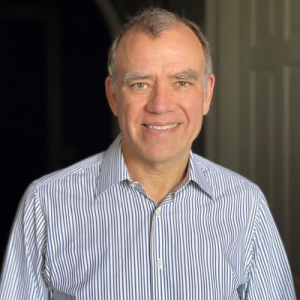 CHRISTOPHER WILKINS was appointed Music Director of the Boston Landmarks Orchestra in the spring of 2011. Since then, he has expanded the orchestra’s mission of making great music accessible to the whole community. He has also helped develop the orchestra’s Breaking Down Barriers initiative, making accessibility a priority in all aspects of the orchestra’s activities.