Landmarks Orchestra's logo that reads: "Boston Landmarks Orchestra" surrounded by a deep purple rectangle. Clockwise, there are other squares with different colors and abstract figures in white, including an orange square with a violin player, a brown square with a conductor with a baton, a red square with a narrator reading from a book, a yellow square with a flute player, a gray square with two figures applauding, and a green square with a dancer.

Mercury Orchestra

Wednesday, August 6 at 7:00pm
DCR Hatch Memorial Shell

Table of Contents

Longwood Symphony Orchestra

Mercury Orchestra
Channing Yu, conductor
David Rivera Bózon, tenor
New World Chorale (NWC)
Holly MacEwen Krafka, Artistic Director (NWC)

Intimations of Immortality Gerald Finzi
(1901-1956)

intermission

Pines of Rome Ottorino Respighi
(1879-1936)

Intimations of Immortality

Song Cycle by Gerald Finzi (1901 – 1956)


1. There was a time when meadow, grove, and stream

There was a time when meadow, grove, and stream,

The earth, and every common sight,

To me did seem

Apparell’d in celestial light,

The glory and the freshness of a dream.

It is not now as it hath been of yore; —

Turn wheresoe’er I may,

By night or day,

The things which I have seen I now can see no more.


2. The Rainbow comes and goes

The rainbow comes and goes,

And lovely is the rose;

The moon doth with delight

Look round her when the heavens are bare;

Waters on a starry night

Are beautiful and fair;

The sunshine is a glorious birth;

But yet I know, where’er I go,

That there hath pass’d away a glory from the earth.


3. Now, while the birds thus sing a joyous song

Now, while the birds thus sing a joyous song,

And while the young lambs bound

As to the tabor’s sound,

To me alone there came a thought of grief:

A timely utterance gave that thought relief,

And I again am strong.

The cataracts blow their trumpets from the steep; —

No more shall grief of mine the season wrong:

I hear the echoes through the mountains throng,

The winds come to me from the fields of sleep,

And all the earth is gay;

Land and sea

Give themselves up to jollity,

And with the heart of May

Doth every beast keep holiday; —

Thou child of joy,

Shout round me; let me hear thy shouts, thou happy Shepherd boy!


4. Ye blessed Creatures, I have heard the call

Ye blessed creatures, I have heard the call

Ye to each other make; I see

The heavens laugh with you in your jubilee;

My heart is at your festival,

My head hath its coronal,

The fullness of your bliss, I feel — I feel it all.

O evil day! if I were sullen

While the Earth herself is adorning

This sweet May morning;

And the children are culling

On every side,

In a thousand valleys far and wide,

Fresh flowers; while the sun shines warm,

And the babe leaps up on his mother’s arm: —

I hear, I hear, with joy I hear!

— But there’s a tree, of many, one,

A single field which I have look’d upon,

Both of them speak of something that is gone:

The pansy at my feet

Doth the same tale repeat:

Whither is fled the visionary gleam?

Where is it now, the glory and the dream?


5. Our birth is but a sleep and a forgetting

Our birth is but a sleep and a forgetting;

The Soul that rises with us, our life’s Star,

Hath had elsewhere its setting

And cometh from afar;

Not in entire forgetfulness,

And not in utter nakedness,

But trailing clouds of glory do we come

From God, who is our home:

Heaven lies about us in our infancy!

Shades of the prison-house begin to close

Upon the growing Boy,

But he beholds the light, and whence it flows,

He sees it in his joy;

The Youth, who daily farther from the east

Must travel, still is Nature’s priest,

And by the vision splendid

Is on his way attended;

At length the Man perceives it die away,

And fade into the light of common day.


6. Earth fills her lap with pleasures of her own

Earth fills her lap with pleasures of her own;

Yearnings she hath in her own natural kind,

And, even with something of a mother’s mind

And no unworthy aim,

The homely nurse doth all she can

To make her foster-child, her inmate, Man,

Forget the glories he hath known,

And that imperial palace whence he came.


7. Behold the Child among his new‑born blisses

Behold the Child among his new-born blisses,

A six years’ darling of a pigmy size!

See, where ‘mid work of his own hand he lies,

Fretted by sallies of his mother’s kisses,

With light upon him from his father’s eyes!

See, at his feet, some little plan or chart,

Some fragment from his dream of human life,

Shaped by himself with newly-learn’d art;

A wedding or a festival,

A mourning or a funeral;

And this hath now his heart,

And unto this he frames his song:

Then will he fit his tongue

To dialogues of business, love, or strife;

But it will not be long

Ere this be thrown aside,

And with new joy and pride

The little actor cons another part;

Filling from time to time his “humorous stage”

With all the Persons, down to palsied Age,

That Life brings with her in her equipage;

As if his whole vocation

Were endless imitation.


8. Thou, whose exterior semblance doth belie

Thou, whose exterior semblance doth belie

Thy soul’s immensity;

Thou best philosopher, who yet dost keep

Thy heritage, thou eye among the blind,

That, deaf and silent, read’st the eternal deep,

Haunted for ever by the eternal Mind, —

Mighty Prophet! Seer blest!

On whom those truths do rest

Which we are toiling all our lives to find,

In darkness lost, the darkness of the grave;

Thou, over whom thy immortality

Broods like the day, a master o’er a slave,

A Presence which is not to be put by;

To whom the grave

Is but a lonely bed without the sense or sight

Of day or the warm light,

A place of thought where we in waiting lie;

Thou little Child, yet glorious in the might

Of heaven-born freedom on thy being’s height,

Why with such earnest pains dost thou provoke

The years to bring the inevitable yoke,

Thus blindly with thy blessedness at strife?

Full soon thy soul shall have her earthly freight,

And custom lie upon thee with a weight

Heavy as frost, and deep almost as life!


9. O joy! that in our embers

O joy! that in our embers

Is something that doth live;

That Nature yet remembers

What was so fugitive!

The thought of our past years in me doth breed

Perpetual benediction: not indeed

For that which is most worthy to be blest,

Delight and liberty, the simple creed

Of childhood, whether busy or at rest,

With new-fledged hope still fluttering in his breast: —

Not for these I raise

The song of thanks and praise;

But for those obstinate questionings

Of sense and outward things,

Fallings from us, vanishings;

Blank misgivings of a creature

Moving about in worlds not realized,

High instincts, before which our mortal nature

Did tremble like a guilty thing surprised:

But for those first affections,

Those shadowy recollections,

Which, be they what they may,

Are yet the fountain-light of all our day,

Are yet a master-light of all our seeing;

Uphold us, cherish, and have power to make

Our noisy years seem moments in the being

Of the eternal Silence: truths that wake,

To perish never;

Which neither listlessness, nor mad endeavour,

Nor man nor boy,

Nor all that is at enmity with joy,

Can utterly abolish or destroy!

Hence, in a season of calm weather,

Though inland far we be,

Our souls have sight of that immortal sea

Which brought us hither;

Can in a moment travel thither —

And see the children sport upon the shore,

And hear the mighty waters rolling evermore.


10. Then sing, ye Birds, sing, sing a joyous song!

Then sing, ye birds, sing, sing a joyous song!

And let the young lambs bound

As to the tabor’s sound!

We, in thought, will join your throng,

Ye that pipe and ye that play,

Ye that through your hearts to-day

Feel the gladness of the May!

What though the radiance which was once so bright

Be now for ever taken from my sight,

Though nothing can bring back the hour

Of splendour in the grass, of glory in the flower;

We will grieve not, rather find

Strength in what remains behind;

In the primal sympathy,

Which having been must ever be;

In the soothing thoughts that spring

Out of human suffering;

In the faith that looks through death;

In years that bring the philosophic mind.


11. And O, ye Fountains, Meadows, Hills, and Groves

And, O ye Fountains, Meadows, Hills, and Groves,

Forbode not any severing of our loves!

Yet in my heart of hearts I feel your might;

I only have relinquish’d one delight

To live beneath your more habitual sway:

I love the brooks which down their channels fret

Even more than when I tripp’d lightly as they;

The innocent brightness of a new-born day

Is lovely yet;

The clouds that gather round the setting sun

Do take a sober colouring from an eye

That hath kept watch o’er man’s mortality;

Another race hath been, and other palms are won.

Thanks to the human heart by which we live,

Thanks to its tenderness, its joys and fears,

To me the meanest flower that blows can give

Thoughts that do often lie too deep for tears.


Run Time

The total run time of this concert is approximately two hours with one intermission.

Boston Landmarks Orchestra

Boston Landmarks Orchestra LogoBoston Landmarks Orchestra builds community through great music. Landmarks produces free concerts and musical events across the greater Boston area. Increasing access to music for everyone is at the core of all its programming. Between 2018 and 2023, 70% of the repertoire Landmarks performed was written by composers of color or women. The orchestra intentionally promotes artists and targets audiences that have been historically excluded from orchestral music. Landmarks was founded in 2001 and began its signature summer concert series at the DCR Hatch Memorial in 2007. The orchestra also performs community concerts at local venues in neighborhoods such as Roxbury, Dorchester, and Jamaica Plain.

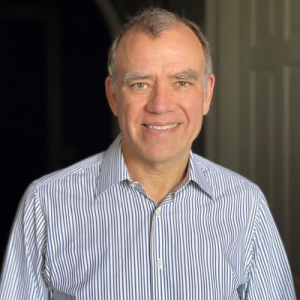
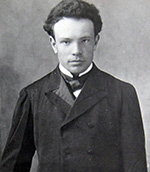
Headshot of Christopher Wilkins. He is smiling, wearing a gray and light blue shirt.CHRISTOPHER WILKINS was appointed Music Director of the Boston Landmarks Orchestra in the spring of 2011. Since then, he has expanded the orchestra’s mission of making great music accessible to the whole community. He has also helped develop the orchestra’s Breaking Down Barriers initiative, making accessibility a priority in all aspects of the orchestra’s activities.

Mr. Wilkins also serves as Music Director of the Akron Symphony. As a guest conductor, Mr. Wilkins has appeared with many of the leading orchestras of the United States, including those of Chicago, Cincinnati, Cleveland, Dallas, Detroit, Houston, Indianapolis, Los Angeles, Pittsburgh, and San Francisco. Previously, Mr. Wilkins served as Music Director of the Orlando Philharmonic, the San Antonio Symphony, and the Colorado Springs Symphony.

He has served as associate conductor of the Utah Symphony, assisting Joseph Silverstein; assistant conductor of the Cleveland Orchestra under Christoph von Dohnányi; conducting assistant with the Oregon Symphony under James DePreist; and was a conducting fellow at Tanglewood. He was winner of the Seaver/NEA Award in 1992.

Born in Boston, Mr. Wilkins earned his bachelor’s degree from Harvard College in 1978. He received his master of music degree at Yale University in 1981, and in 1979 attended the Hochschule der Künste in West Berlin as a recipient of the John Knowles Paine traveling fellowship. As an oboist, he performed with many ensembles in the Boston area, including the Berkshire Music Center Orchestra at Tanglewood, and the Boston Philharmonic under Benjamin Zander.

Violin I

Jennifer Hsiao, Concertmaster

Julia Wong, Associate Concertmaster

Demi Fang, Assistant Concertmaster

Jessica Garbern, Assistant Concertmaster

Jean Bae

Stephanie Doong

Bryan Huang

Emma Lavoie

Stan Mah

Bernice Wong


Second Violin

Rose Moerschel, Principal

Arjun Mudan, Associate Principal

Marissa Chou

Nicholas Chubrich

Rossana Chung

Ashton Hulit

David Miyamoto

Sam Rabieh

Jenny Smythe

Jan Steenbrugge


Viola

James Raftopoulos, Principal

Rebecca Morris, Associate Principal

Susan Bill

Peter Chew

Matthew Colturi

Catharine Crawford

Mary Hecht

Eric Lee

Grey Lee

Al Leisinger

Liz Scoma

Mary Weeks


Violoncello

Aster Zhang, Principal

Maggie Zager, Associate Principal

Kjelden Breidenbach

Guillermo del Angel

Miles Edwards

Tim Xu

Avery Yen


Contrabass

Brett Sawka, Principal

Alejandro Cimadoro

Jim Gray

Liz Horwitz

Juan Pineda


Flute and Piccolo

Frida Linderang

Ellen Rakatansky

Brenn Parker


Oboe and English Horn

Veronica Kenney

Deanna Dawson

Carol Louik

Clarinet

Raymond Lam

Brian Schaefer

Joseph Kanapka


Bassoon and Contrabassoon

Lauren Landry

Sarah Abraham

Jeffrey Freeman


French Horn

Jon McGarry

Isaac Julien

Katie Mason

Portia Sirinek

Mattéo Couplet

Paola Cano


Trumpet

Kira Shmeleva

Karen Martin

Brian Bunnell

Kyle Ducharme

Karl Stanley


Tenor Trombone

Anthony Ohannessian

Roger Hecht


Bass Trombone

Matthew Visconti


Tuba

Taz Chowdhury


Timpani

Eric Cortell


Percussion

Frank Kumiega

Christian Ogata

Gerry Seixas

Greg Savino


Harp

Angelina Savoia


Celesta and Organ

Yizhe Sun


Piano

Kimie Han


Stage Manager

Thomas Engeln


Librarian

Mai Anh Huynh

Soprano

Ingrid Bartinique

Pengwynne Blevins

Jeni Cameron

Jane Circle

Lisa Ferretti

Deborah Greenman

Cynde Hartman

Leslie Horst

Elisabeth Howe

Faye Kalmbach

Kathryn Low

Carol McKeen

Elizabeth Norton

Keiko Nakagawa

Stella J. Owen

Susan Rubin

Peg Schadelbauer

Patricia Stewart

Laren Syer


Alto

Janet Buecker

Betsy Draper

Diane Droste

Laren Evans

Meghan Gayton

Sara Glidden

Brenda Haggerty

Janice Hegeman

Sari Kalin

Kristine Lessard

Randi Levine

Kristen McEntee

Montie Meyer

Carey Pink

Bina Joy Pliskin

Ada Park Snider

Debbie Sosin

Nancy Stevenson

Portia S. Walker

Tenor

Jennifer Chrisitan

Phillip Devlin

Reg Didham

Anuththari Gamage

J. Stephen Groff

Kathleen Haley

Paul W Harvey

Stanley G Hudson

James R. Kauffman

Lance Levine

Ronald J. Martin

Dave Miller

Sam Pilato

Mariflor Salas

Frank Villa

Andrew Wright


Bass

Ron Armstrong

Phil Carens

Neil Clark

Peter Cooper

Carl Howe

Lee Jaffe

Craig Leckband

Chris Loschen

Henry Magno

Dan Malis

Brian Rappaport

A. Michael Ruderman

David Siktberg

Barry Singer

Paul Tessier

Guest Artists

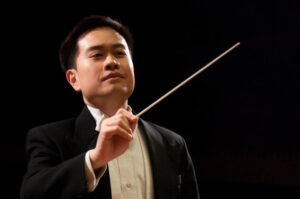
Headshot of Channing Yu conducting

American orchestra and opera conductor Channing Yu is Music Director of the Mercury Orchestra in Cambridge, Massachusetts. He is the national winner of the 2010 American Prize in Orchestral Conducting in the community orchestra division.

He previously served as Music Director of the Dudley Orchestra in Cambridge; Music Director of Bay Colony Brass in Watertown; and Associate Artistic Director of the Refugee Orchestra Project in New York City. He has also served as Artistic Director and Conductor of the Lowell House Opera, conducting over thirty fully staged performances with orchestra, including Tchaikovsky’s Eugene Onegin, Richard Strauss’s Der Rosenkavalier, Puccini’s Turandot, Verdi’s Otello, and Puccini’s Tosca.

He began formal study of conducting at Harvard University with James Yannatos; there he served as assistant conductor of the Harvard-Radcliffe Orchestra and conductor of the Toscanini Chamber Orchestra. Since then, he has worked with a number of conductor teachers in Europe and the United States, including Kenneth Kiesler, Roberto Paternostro, Diane Wittry, Charles Peltz, Frank Battisti, Neeme Järvi, Leonid Grin, Paavo Järvi, George Pehlivanian, Johannes Schlaefli, and Sandro Gorli.

Channing Yu grew up in Pennsylvania. Originally trained as a pianist, he was a divisional grand prize winner of the American Music Scholarship Association International Piano Competition, and he has appeared as piano soloist with the Pittsburgh Symphony Orchestra, Westmoreland Symphony Orchestra, Dayton Philharmonic Orchestra, and Orchèstra Nova. He has been praised by Anthony Tomassini of The Boston Globe for his “imaginative piano work.” As a violinist, he has served as concertmaster of the Brahms Society Orchestra and the Greenwich Village Orchestra and as violinist in the Boston Philharmonic Orchestra and Camerata Notturna, and currently performs as concertmaster or principal second violinist of the Chelsea Symphony in New York City. He has also sung with the Tanglewood Festival Chorus.

Mercury Orchestra logo

Founded in 2008, the Mercury Orchestra has a mission:

To bring great works of the symphony orchestra repertoire to Cambridge, Massachusetts, in live performances of the highest quality;
To bring amateur orchestral musicians together in the Cambridge area to play challenging repertoire;
To educate new audiences about the rich traditions of classical music.

The Mercury Orchestra is the national winner of the 2010 American Prize for Orchestral Performance, community orchestra division.

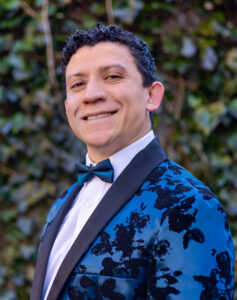
Headshot of David Rivera BozonDavid Rivera Bozón is a Colombian tenor recognized internationally for his extraordinary talent and warm personality. He has extensive performance experience in opera, stageworks, zarzuela, oratorio, concerts, recitals, and performances in unconventional places, bringing his music to a diverse range of communities.

He has performed with a wide variety of local and international companies as soloist and ensemble artist, including Boston Lyric Opera, MassOpera, Belcanto Opera, Opera 51, Boston Midsummer Opera, Boston Opera and Zarzuela, the Veronica Robles Cultural Center, Odyssey Opera, Opera de Colombia, Orchesta Sinfónica de Colombia and Orquesta Filarmonica de Bogotá. He has performed in venues such as Jordan Hall, Teatro Mayor Julio Mario Santodomingo, Carnegie Hall, and in street and park performances.

Mr. Bozón has performed the main tenor roles in the operas Florencia en el Amazonas by Daniel Catán; L’Amico Fritz by Pietro Mascagni; L’Élisir d’Amore by Gaetano Donizetti; La Traviata and Rigoletto by Giuseppe Verdi; operas by Puccini including La Bohème, Gianni Schicchi, Madama Butterfly and Tosca; and operas by Mozart including Die Zauberflöte, Idomeneo, La Finta Giardiniera and Don Giovanni.

David is also committed to the social and artistic impact of music. He is part of the board of Opera on Tap (“Bringing opera performances to unconventional venues”), The New England Association for Colombian Children, NEACOL, and the Dante Alighieri Opera of Boston.

David is pursuing a Performance Diploma in Opera at the Opera Institute by Boston University. He has a master’s degree from New England Conservatory and bachelor’s degree from the National University of Colombia.

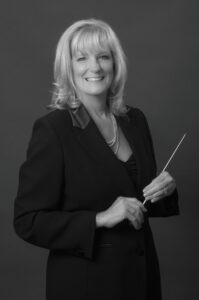
Headshot of Holly MacEwen Krafka holding her baton.Holly MacEwen Krafka, the founder and Artistic Director of the New World Chorale, has been a conductor, educator, and performer in a wide range of musical activities for many years. A native of Wellesley, Massachusetts, she is a graduate of Gettysburg College and holds a master’s degree in choral conducting from Boston Conservatory. As a singer, Ms. Krafka was a member of the Tanglewood Festival Chorus for 20 years.

A retired music educator, Ms. Krafka was music director and vocal director in a number of local area churches and school systems, including in Wellesley, Hopkinton, and Franklin, Massachusetts; at Bishop Feehan High School in Attleboro, Massachusetts; and at Bishop Guertin High School in Nashua, New Hampshire.

Logo of the New World Chorale noting their 25th anniversary.Last season, New World Chorale (NWC) celebrated its 25th anniversary! NWC is one of the most in-demand symphonic choruses in the greater Boston area and has performed major choral works with: Bach, Beethoven, and Brahms Society; Boston Ballet; Boston Conservatory Brass Ensemble; Boston Conservatory Orchestra; Boston Landmarks Orchestra; Boston Youth Symphony Orchestra; Cape Ann Symphony; Carlisle Chamber Orchestra; Claflin Hill Symphony Orchestra; Lexington Symphony; Longwood Symphony Orchestra; Melrose Symphony Orchestra; Mercury Orchestra; MIT Symphony Orchestra; New England Brass Band; New Philharmonia Orchestra; Plymouth Philharmonic Orchestra; Rhode Island Philharmonic; Symphony New Hampshire; Symphony Pro Musica; and Wellesley Symphony Orchestra.

The New World Chorale was founded in 1999 by Holly MacEwen Krafka and John Zielinski and is dedicated to sharing the beauty and majesty of symphonic choral music with orchestras and audiences in greater Boston and beyond. NWC’s members include some of the region’s most experienced choral singers and soloists who have performed locally and internationally with world-renowned orchestras. For more information, visit NWC’s website at www.newworldchorale.org.

Program Notes

Gerald Finzi: Intimations of Immortality, Op. 29, an ode for tenor, chorus, and orchestra

English music is imbued with the English countryside and the ocean with its rocky coastline and cliff-sides. It is full of English history, literature, and folklore. Its color is that of soft pastels of a misty day on a moor. Some of it is walking and marching music, not with arrogance, but with a confidence bordering on serenity. No country’s composers talk about “tunes” as much as England’s do. English melody is vocal and distinctive and often modal; perhaps that comes from the English choral tradition. The English have always sung, and they didn’t stop when they wrote for orchestra.

English composer Gerald Finzi was born in London in July 1901. His father and three brothers died when he was quite young. In 1914 his family settled in Harrogate, and in 1915 he began to study music composition with English composer and organist Ernest Farrar, a pupil of noted English composer Charles Villiers Stanford. Finzi found Farrar to be a fine teacher, but the lessons came to an end when Farrar was called up to serve in the Great War. Like many composers of the time who were forced to walk the path to war, Farrar was killed in battle, a loss that his former pupil found devastating. Fortunately, young Finzi was able to move on and study with another English organist and composer, Edward Bairstow.

In 1922 Finzi moved to Gloucestershire in southwest England. After studying counterpoint with Reginald Owen Morris (better known as R.O. Morris), he moved back to London where he met several major English composers including Gustav Holst and Ralph Vaughan Williams who helped him obtain a teaching post at the Royal Academy of Music in 1930. In 1933 he moved to Aldbourne, a village in southwest England. He moved again in 1939, this time to nearby Ashmansworth where he founded the Newbury String Players and championed the music of neglected 18th century English composers as well as Gloucester-born composer and poet Ivor Gurney. During World War II he served at the Ministry of War Transport until 1945.

Gerald Finzi was a man of several interests. A literary man as well as a composer, he admired the works of Thomas Hardy and William Wordsworth enough to set some of their texts in his vocal pieces. He not only read books, he collected them, and many of his 3,000 volumes are now in the libraries of the University of Reading and the University of St. Andrews. His music research led to the publication of pieces by several English composers from the 18th and 20th Centuries. He also developed an apple orchard where he grew over 300 varieties of apples.

Given the tragedies of Finzi’s youth, it is no surprise that many of his works are sad in tone with some dealing with childhood innocence corrupted by adult experience. For solace he often turned to the poetry of William Wordsworth, Thomas Traherne, Thomas Hardy, and Christina Rossetti. He also began to set poetry to music. The two came together in Intimations of Immortality. a setting of nine stanzas of William Wordsworth’s eleven-stanza poem Ode: Intimations of Immortality from Recollections of Early Childhood. (Finzi did not set stanzas seven and eight.) The work is scored for tenor soloist, chorus, and orchestra and fits comfortably in the English chorus and orchestra tradition. He started its composition in the late 1930s, but his service in World War II delayed completion until 1950—a gap that partly explains why the music of Intimations fits so nicely between the music of English composers like Vaughan Williams, Edward Elgar, Herbert Howells, Charles Hubert Parry, Charles Villiers Stanford, and others. and the more modern ones like William Walton and Benjamin Britten. Works with a chorus are often based on written text that is not well understood in performance, but Wordsworth’s text is reasonably discernable, thanks to the clarity of Finzi’s writing. That is a major asset because there is an interesting philosophical quality to Wordsworth’s poem.

Finzi was originally going to dedicate Intimations to Ralph Vaughan Williams, but instead he dedicated it to Vaughan Williams’ first wife, Adeline. The piece was premiered at the Three Choirs Festival in Gloucester in 1950 with Herbert Sumsion conducting. Gerald Finzi died on September 27, 1956, at the age of 55. As if to intuitively bid him farewell, his new Cello Concerto was first broadcast on BBC radio the night before his death.

—Roger Hecht

Ottorino Respighi: Pini di Roma (Pines of Rome), P. 141

Italian composer Ottorino Respighi was born in 1879 in Bologna, Italy to a musical family. His father, a local piano teacher, gave him his first lessons on piano and violin. From there the boy moved on to the Liceo Musicale di Bologna in 1891, where he studied violin and viola with Federico Sarti (first violinist of Das Bologneser Quartett), composition with composer Giuseppe Martucci, and music history with Early Music scholar Luigi Torchi (a subject Respighi would later pursue). His first student compositions appeared in 1893. After he received his violin diploma in 1899, he made trips to Russia in 1900 and 1902 to work as an orchestral violinist/violist during seasons of Italian opera at the Imperial Theatre in St. Petersburg, where he also studied orchestration with Nicolai Rimsky-Korsakoff, whose teachings served him well, if his colorful scoring is any indication. In 1901 he finished his studies at Liceo Musicale with an advanced degree in composition. After returning to Italy in 1903, he worked as a violin soloist and as a violist in the Mugellini Quintet. In 1908 he moved to Germany and worked as a piano accompanist in a voice studio for a year (and in the process learned about vocal technique). Later he moved back to Bologna to teach composition at Liceo Musicale.

In 1913 Respighi moved to Rome, where he became a professor of composition at the Liceo Musicale di Santa Cecilia. He spent a great deal of time roaming the city’s streets and environs while taking serious notice of its fountains, an experience that led to his first major work, Fontane di Roma (Fountains of Rome), in 1916. In 1919 he married one of his pupils, mezzo-soprano and composer Elsa Olivieri-Sangiacomo, who would be a strong advocate and performer of her husband’s music. Two years later he produced a children’s opera, La Bella Dormente nel Bosco (The Sleeping Beauty in the Woods), the first of his works to be formally staged. Respighi’s interest in Renaissance and Medieval music led to a set of Medieval-style airs for lute that he later orchestrated into three suites entitled Antiche Danze ed Arie per Liuto (Ancient Airs and Dances, 1917, 1923, and 1931). In 1924, Respighi was appointed the Director of Conservatorio di Santa Cecilia, a position he filled for only two years because it interfered with his composing (though he continued to teach until 1935). He also composed, performed, and conducted in Europe and the Americas. After he died in 1936, Elsa Respighi vigorously promoted her husband’s reputation and music until her own death in 1996, a week before she would have turned 102.

Ottorino Respighi was the only major Italian composer of his era whose orchestral works, particularly his Roman trilogy—Fontane di Roma (Fountains of Rome), Pini di Roma (Pines of Rome), and Feste Romane (Roman Festivals)—caught on with audiences more than his operas did.

Pines of Rome depicts four settings of pine trees in Rome. Much of the music is based on Medieval works and folk songs that Respighi learned from his wife. The score calls for some unusual instruments: six buccinae: trumpet-like instruments made of a long tube bent into a C-shape and used in the Pines of the Appian Way movement, and a recording of a nightingale at the end of Pines of the Janiculum. Respighi was well aware of the difficulties in finding or manufacturing six buccinae and wisely sanctioned the use of modern brass instruments in performances. He was not so sanguine about audience response to hearing a recording of a live bird tweeting in Pines of the Janiculum:  “…[N]o combination of wind instruments could quite counterfeit a real bird’s song,” he explained. “Let them boo…What do I care?” referring to an audience reaction to his publisher’s use of a recording of a bird made in 1924—the same recording that is used in subsequent performances including modern ones. The composer did want to help people appreciate the musical pictures in Pines of Rome, so he described each movement as noted below, for use in concert programs:

  • I pini di Villa Borghese (The Pines of the Villa Borghese): “Children are at play in the pine groves of Villa Borghese; they dance round in circles, they play at soldiers, marching and fighting, they are wrought up by their own cries like swallows at evening, they come and go in swarms.”
  • Pini presso una catacomba (Pines Near a Catacomb): “Suddenly the scene changes—we see the shades of the pine trees fringing the entrance to a catacomb. From the depth rises the sound of a mournful chant floating through the air like a solemn hymn and gradually and mysteriously dispersing.”
  • I pini del Gianicolo (The Pines of the Janiculum): “There is a thrill in the air: the pine-trees of the Janiculum stand distinctly outlined in the clear light of the full moon. A nightingale is singing.”
  • I pini della via Appia (The Pines of the Appian Way): “Misty dawn on the Appian Way: solitary pine trees guarding the magic landscape; the muffled, ceaseless rhythm of unending footsteps. The poet has a fantastic vision of bygone glories: trumpets sound and, in the brilliance of the newly risen sun, a consular army bursts forth towards the Sacred Way, mounting in triumph to the Capitol.”

Respighi is best known for his orchestral works, but his operas are worth investigating. In chronological order they are Re Enzo (King Enzo), Semirâma, Marie Victoire, La Bella Dormente nel Bosco, (The Sleeping Beauty in the Woods), BelfagorLa Campana Sommersa (The Sunken Bell), Maria Egiziaca (Saint Mary of Egypt), La Fiamma (The Flame), and Lucrezia (completed posthumously by Elsa and Respighi’s student Ennio Porrino).

—Roger Hecht

Roger Hecht plays trombone in the Mercury Orchestra. He is a former member of Bay Colony Brass (where he was also the Operations/Personnel Manager), the Syracuse Symphony, Lake George Opera, New Bedford Symphony, and Cape Ann Symphony, as well as trombonist and orchestra manager of Lowell House Opera, Commonwealth Opera, and MetroWest Opera. He is a regular reviewer for American Record Guide, contributed to Classical Music: Listener’s Companion, and has written articles on music for the Elgar Society Journal and Positive Feedback magazine. His fiction collection, The Audition and Other Stories, includes a novella about a trombonist preparing for and taking a major orchestra audition (English Hill Press, 2013).

Ambassador Program

Started in 2022, the Ambassador Program aims to seasonally employ enthusiastic, music-loving folks from a variety of backgrounds, representing the diversity of Boston’s neighborhoods. With 54% of our Ambassadors speaking more than one language—including Spanish, Portuguese, and French—they help spread the word of Boston Landmarks Orchestra to a vast number of Boston communities, including Roxbury, Jamaica Plain, East Boston and more. From promoting our concerts in their own neighborhoods, to helping patrons both new and familiar navigate the Esplanade, our Ambassadors are here to engage as many people as possible, promoting Boston Landmarks Orchestra’s mission of building community through great music.

THANK YOU
to our many donors and supporters. 

Click here for current list of donors 

Special thanks to Directors, Advisors, Musicians and Staff who make our work possible.

Click here for a list of Board Members

Share With Us!

Tag us @LandmarksOrch

Use the hashtags #LandmarksOrchestra #Landmarks2025

Translate »